ScienceBasedKids.com may earn a commission from affiliate links in this review. Our ratings are never influenced by affiliate relationships. Read our full methodology.
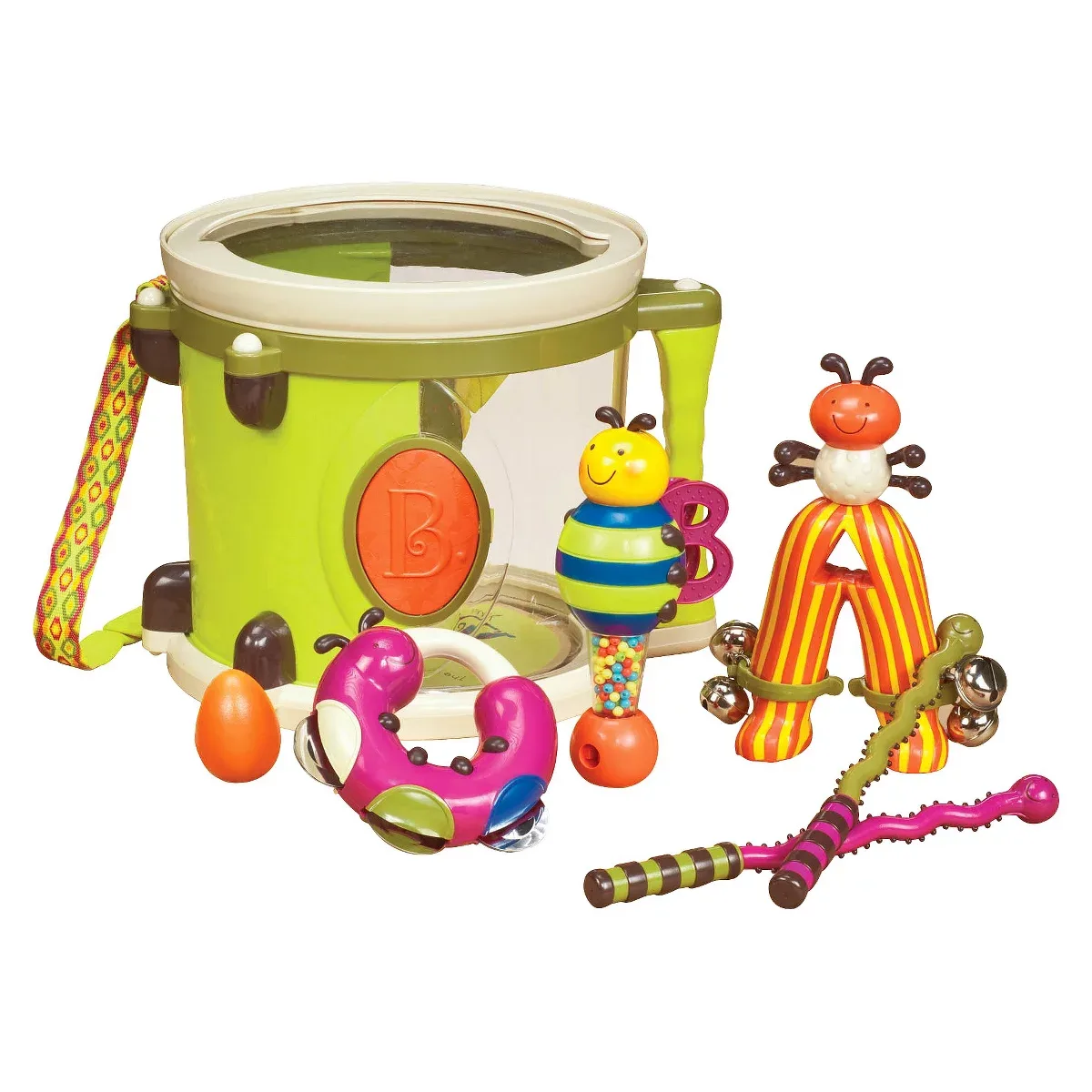
B. toys has a talent for solving the logistical problem that most toy companies ignore: where do you put it when playtime is over? The Parum Pum Pum solves this by making the drum itself the storage container. Pop the lid off, and the drum becomes a case holding drumsticks, a jingle bell, a tambourine, a maraca, and an egg shaker. Pop the lid back on, sling the carrying strap over a shoulder, and the entire percussion section goes wherever the child goes. It’s elegant packaging design in service of a genuinely solid musical toy set.
We tested the Parum Pum Pum across three households with children ages 16 months to 5 years over five weeks.
Product Overview
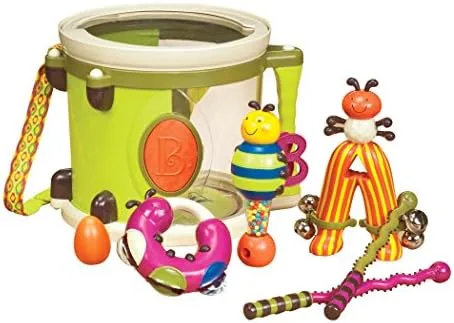
The B. toys Parum Pum Pum ($30) is a portable percussion set:
- Drum: 9.5” diameter with natural-feel drum head and carrying handle
- Carrying strap: Soft cotton strap for shoulder carrying
- Centipede drumsticks: Pair of beaded drumsticks
- Jingle bell ant: Handheld jingle bell shaped like an ant
- Bee maraca: Maraca shaped like a bee
- Tambourine: Small tambourine with metal jingles
- Egg shaker: Shaker egg
- Storage: All instruments fit inside the drum under the lid
The B. toys design aesthetic is present throughout — organic shapes, warm colors, and insect-themed characters give each instrument personality beyond its function.
Our Evaluation
Build Quality: 7/10
The drum is the best-constructed component — solid build, responsive drum head, sturdy handle. The carrying strap is well-attached and comfortable. The accessory instruments are a mixed bag: the maraca and egg shaker are solid, the tambourine is functional but lightweight, and the jingle bell feels slightly cheap.
Overall, the set is well-made for the $30 price point. The drum itself could sell independently as a quality toddler instrument.
Play Value: 7/10
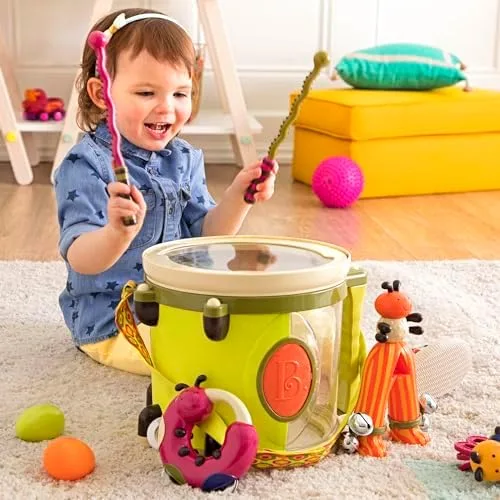
Percussion play is inherently accessible to toddlers — you hit things and they make sounds. The variety of instruments introduces different sound production methods: striking (drum), shaking (maraca, egg shaker), and jingling (tambourine, bell). This variety keeps play fresh and introduces the concept that different actions produce different sounds.
The drum is the clear favorite in our testing. Children returned to it most frequently and engaged with it for the longest sessions. The accessory instruments were used in shorter bursts, often during “band” play scenarios with siblings or parents.
Age Appropriateness: 7/10
The 18-month minimum is appropriate for the drum and shakers. The tambourine requires slightly more coordination (holding while shaking). By age 5, children are ready for more structured musical instruments, though the drum retains value for free-form percussion play.
Durability: 7/10
The drum is the most durable component. The smaller instruments are more vulnerable — the jingle bell ant has small parts that could potentially detach under aggressive play, though this didn’t occur during our testing. The drum head material is synthetic and resistant to tearing.
Value for Money: 7/10
Seven instruments for $30 is reasonable, especially with the carry-and-store drum design. The drum alone provides the majority of the play value.
The Evidence
Music and rhythm development. Active music-making in early childhood supports rhythmic awareness and auditory processing. Gerry et al. (2012) found that active musical engagement (including percussion play) in infancy produced more positive social behavior and enhanced neural responses to music compared to passive listening.1
Instrument exploration and executive function. Moreno et al. (2011) demonstrated that short-term musical training improved verbal intelligence and executive function in preschool children.2 While percussion play is simpler than instrumental training, it provides the foundational experience of producing intentional sounds through planned actions.
The honest summary: Active music-making is well-supported by developmental research. The Parum Pum Pum provides accessible entry into percussion play for toddlers.
Safety Notes
Meets ASTM F963 and CPSIA standards. BPA-free and phthalate-free. The egg shaker is the smallest component — it passes choking tests but should be supervised with children under 3. No CPSC recalls on record.
The Verdict
The B. toys Parum Pum Pum is a well-designed percussion set that solves the storage problem while delivering genuine musical play value. The drum is the standout — it’s worth the price alone. The accessory instruments add variety but are secondary to the main event. For families looking to introduce percussion play to toddlers, this set offers good value and exceptional portability.
Product Rating: 7/10 — Clever storage design, quality drum, good instrument variety. Some accessory instruments feel less substantial than the drum.
Evidence Rating: Moderate — Active music-making research is strong. Percussion play supports rhythm development and auditory processing.
Who Should Buy This
- Parents of 18-month to 4-year-olds interested in musical exploration
- Families wanting portable musical toys for travel or outdoor play
- Gift-givers seeking a creative, non-electronic toy set
Who Should Skip This
- Families living in apartments with thin walls (it’s loud)
- Parents who prefer quiet play options
- Children over 5 who need structured musical instruments
This review reflects our independent evaluation. ScienceBasedKids.com purchased this product at retail price. We may earn a commission if you purchase through our links, which helps fund our research. This never influences our ratings.
Footnotes
-
Gerry, D., Unrau, A., & Trainor, L. J. (2012). “Active music classes in infancy enhance musical, communicative and social development.” Developmental Science, 15(3), 398-407. ↩
-
Moreno, S., Bialystok, E., Barac, R., Schellenberg, E. G., Cepeda, N. J., & Chau, T. (2011). “Short-term music training enhances verbal intelligence and executive function.” Psychological Science, 22(11), 1425-1433. ↩
Recommended Accessories
Affiliate links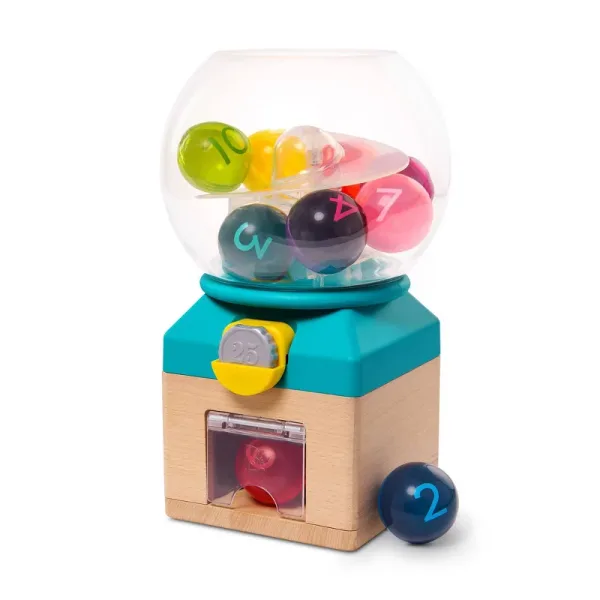
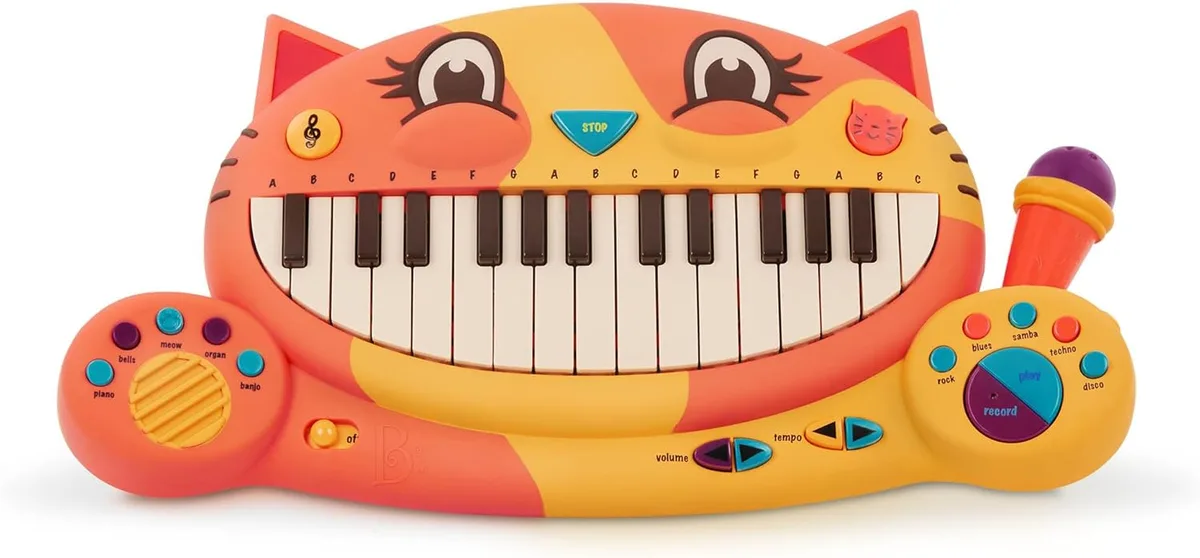
B. toys Symphony Musical Toy Orchestra
“Electronic instrument exploration. Different musical domain from percussion.”
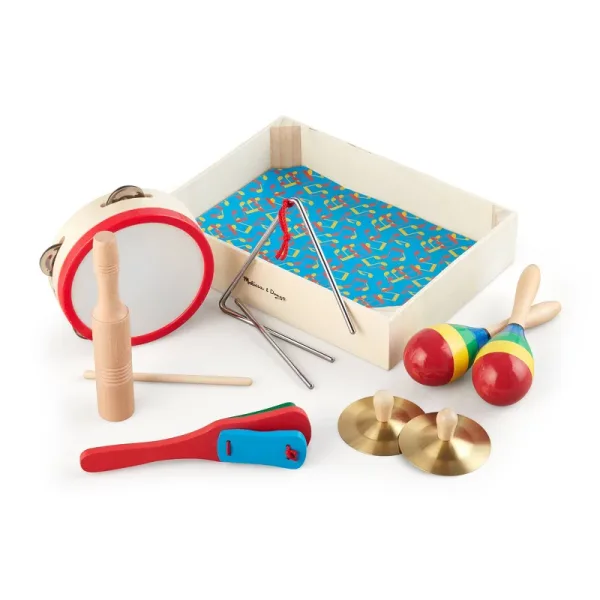
Melissa & Doug Band-in-a-Box Clap! Clang! Tap!
“Similar concept, 10 instruments. More variety but less portable storage.”
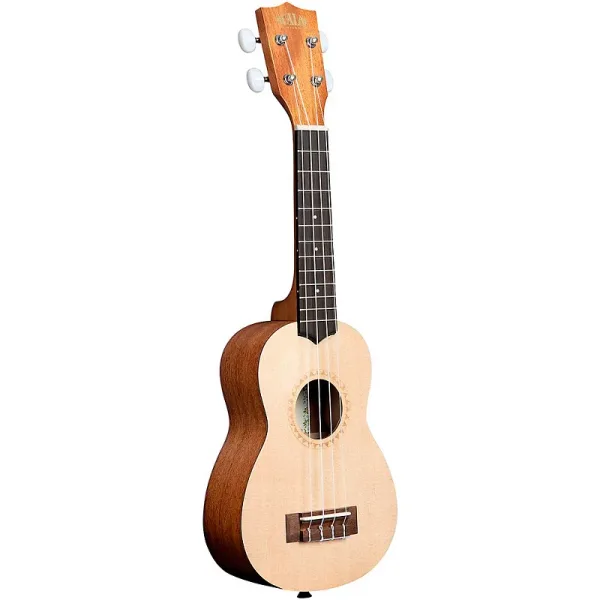
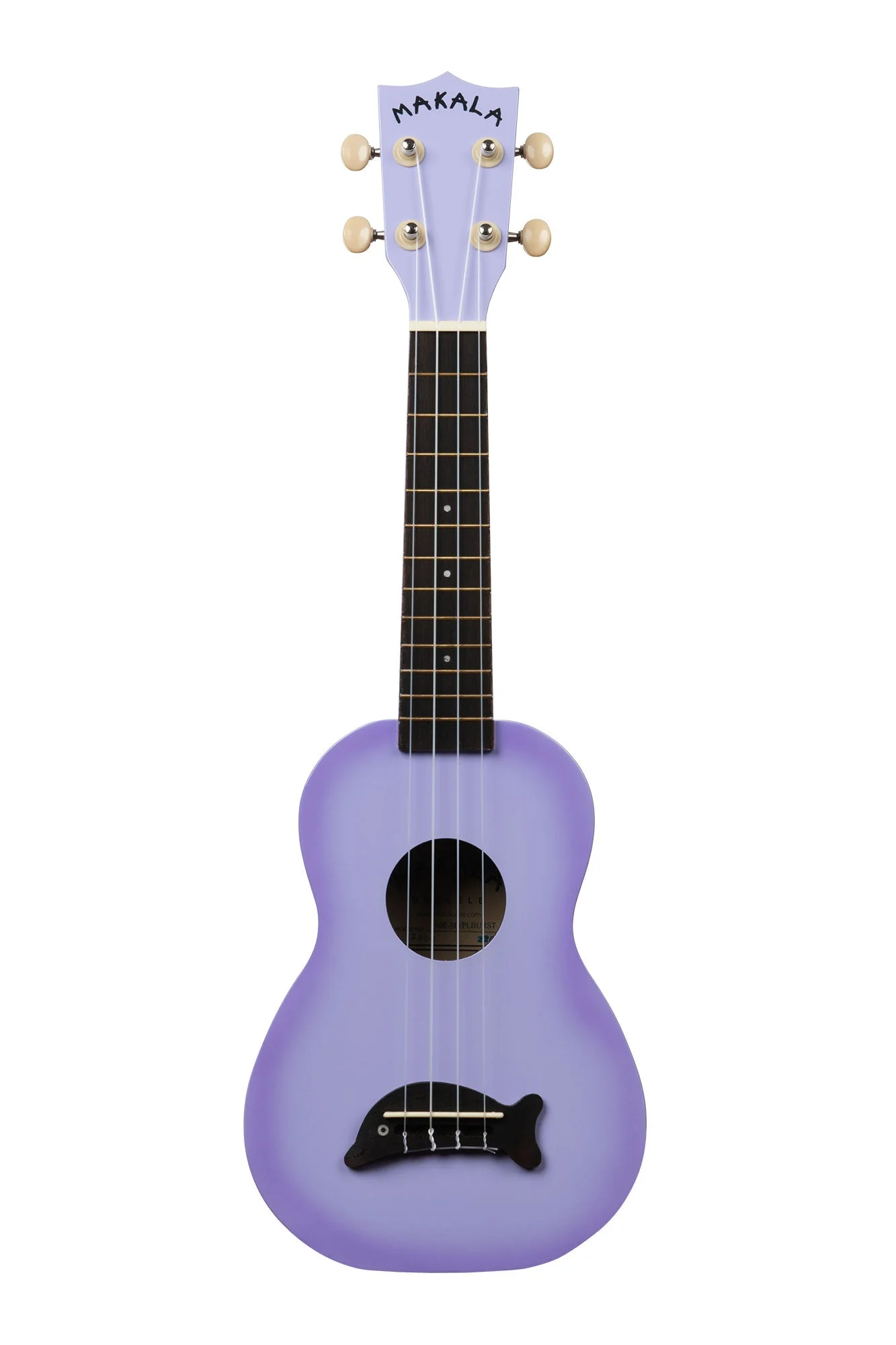
Kala Makala Soprano Ukulele
“For older children ready for a real stringed instrument. Different musical skill.”
Remo Kids Percussion Rain Stick
“Adds a gentle, soothing instrument to the percussion collection.”