ScienceBasedKids.com may earn a commission from affiliate links in this article. Our ratings are never influenced by affiliate relationships. Read our full methodology.
What Magnetism Teaches
- Invisible forces: The idea that “nothing is there” but something pushes/pulls
- Field concept: Magnetic fields — precursor to electromagnetic theory
- Classification: Which materials are magnetic; which aren’t
- Physics foundation: Prepares for electricity + magnetism in middle school
Genuinely foundational physics.
The Short Answer
| Age | Focus | Pick |
|---|---|---|
| 4–6 | Classification + exploration | Learning Resources Magnet Set |
| 7–9 | Fields + forces | Ferrite + neodymium mix |
| 10+ | Electromagnets + real physics | Electromagnet kit |
The Picks
1. Learning Resources Magnetic Set — $30, ages 4+
Contents: Bar + horseshoe + ring magnets; iron filings; magnetic/non-magnetic objects. Strengths: Age-appropriate; comprehensive starter. Ages: 4+.
2. Dowling Magnets Kit — $40, ages 6+
Contents: Variety of magnet types + iron filings viewer. Strengths: Dowling is the classroom-standard magnet supplier. Ages: 6+.
3. Neodymium Magnet Set (Adults + Older Kids) — $15, ages 8+ (with supervision)
Caution: Extremely strong. Can:
- Pinch skin painfully
- Cause injury if swallowed (swallow 2+ = serious medical emergency)
Contents: 25 small rare-earth magnets. Strengths: Serious physics power; demonstrations that ferrite can’t match. Ages: 8+ with strict adult supervision; never with mouthing-prone younger siblings nearby.
4. Electromagnet Kit — $35, ages 10+
What it does: Wire coil + battery + core = switchable magnet. Strengths: Teaches electricity + magnetism connection. Ages: 10+.
Experiments by Age
Ages 4–6: Classification
Experiment 1: Magnet Hunt
- Kid walks through house with magnet.
- Categorizes 20 objects: sticks or doesn’t stick.
- Discussion: What’s special about the ones that stick?
Experiment 2: Distance Test
- Place magnet at one end of table.
- Move paperclip closer. At what distance does it attract?
Experiment 3: Breaking a Magnet
- Show that breaking a magnet creates 2 smaller magnets (not north-only + south-only).
Ages 7–9: Fields
Experiment 1: Iron Filings Visualization
- Paper over magnet.
- Sprinkle iron filings on top.
- Patterns show field lines.
Experiment 2: Compass Behavior
- Compass + bar magnet.
- Compass needle tracks around magnet.
- Kid draws pattern.
Experiment 3: Two Magnets Interaction
- Same poles: repel.
- Opposite poles: attract.
- Kid predicts and tests combinations.
Ages 10+: Advanced
Experiment 1: Electromagnet
- Wrap wire around iron nail.
- Connect to battery.
- Nail becomes magnet when current flows.
- Disconnect; nail loses magnetism.
Experiment 2: Magnet Strength Comparison
- Count paperclips each magnet can hold.
- Quantify: strong magnet holds 5× the paperclips of weaker one.
Experiment 3: Motor Construction (Advanced)
- Simple DC motor from battery + magnet + wire + cork.
- Real introduction to electromagnetism.
Classroom Unit
A 3-week magnetism unit:
Week 1: Discovery
- Magnet hunt.
- Classification.
- Distance experiments.
Week 2: Fields
- Iron filings.
- Compass work.
- Pole interactions.
Week 3: Applications
- Electromagnet.
- Magnet in daily life (credit cards, speakers, motors, MRI).
Safety
Ferrite Magnets (Black/Silver)
- Safe for ages 4+.
- Can’t cause serious injury typically.
Neodymium (Rare Earth) Magnets
- Extremely strong (25×+ stronger than ferrite).
- Serious danger: If 2+ swallowed, they can magnetically attract through intestinal walls, causing perforation.
- Rule: Count before and after. Use only with kids old enough not to mouth.
- Don’t put near credit cards, phones, or electronics.
- Don’t let kids chip them (can shatter).
Electromagnets
- Hot battery + wire can cause burns — use only with 4.5V or lower.
- Don’t connect wire ends without the core (creates short circuit).
Real-World Magnetism
Discuss with kids:
- MRI machines: Hospital magnets so strong they can pull metal objects from pockets. Safety rules.
- Credit cards: Magnetic strip stores information.
- Speakers: Magnets + electricity move cones.
- Electric motors: Wheels of electric cars.
- Earth’s magnetic field: Why compasses work.
- Animals use magnetism: Migratory birds, turtles.
Magnet-Based STEM Toys
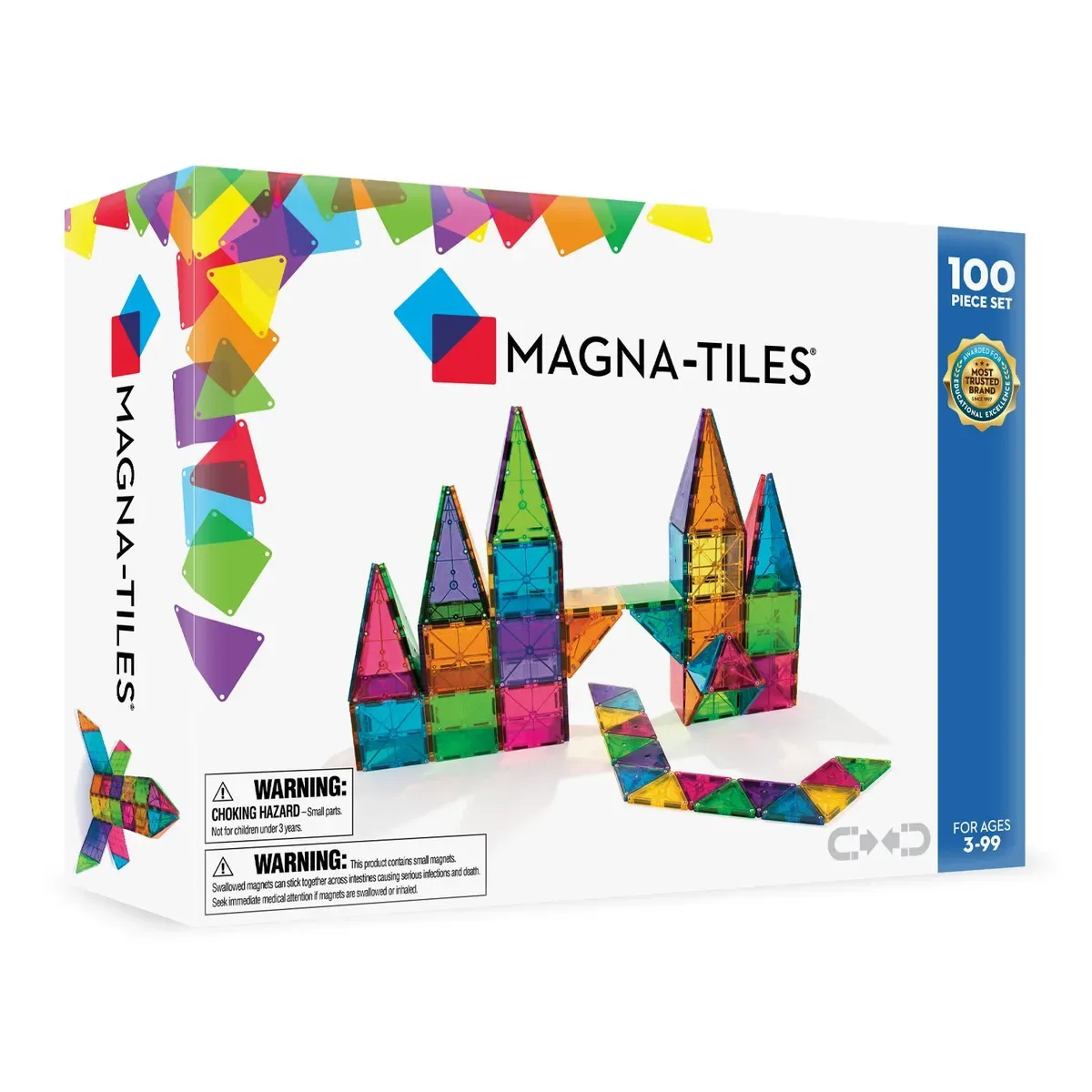
Magna-Tiles — magnetic building tiles; ages 3+. Not explicitly magnetism teaching but demonstrates magnetism constantly in play.
Magnetic tiles alternatives — see our comparison.
SmartMax Magnetic Sticks and Balls — $35; ages 3+.
Science Fair Projects
Magnetism-based projects:
- Electromagnet strength: Vary number of wire coils; measure strength.
- Field lines: Map fields of different-shaped magnets.
- Temperature effect: Does heating reduce magnet strength?
- Earth’s field: Build compass; measure declination from true north.
See 4th grade fair guide and 5th grade guide.
Related Guides
- Snap Circuits Jr vs Classic — electricity + magnetism connection
- Best Electronic Kit for Kids
- Simple Machines Kits for Kids
- Bottle Rocket Experiment Guide — physics
The Bottom Line
Starter for ages 4–6: Learning Resources Magnet Set ($30).
Step-up for 7–9: Dowling Magnets Kit ($40).
For 10+: Electromagnet kit + neodymium magnets (supervised) — $50 total.
Safety: Never unattended with neodymium + young kid.
Budget: $15–$50 covers quality experimentation.
Real world: Connect to MRI, motors, speakers, Earth’s field.
Magnetism is one of the most engaging and foundational physics topics for kids. Worth a full unit of exploration.
Magnetic experiments tested with kids 4–12.