ScienceBasedKids.com may earn a commission from affiliate links in this article. Our ratings are never influenced by affiliate relationships. Read our full methodology.
The 13-Year-Old Reality
Thirteen is the year most “STEM toys” get abandoned. A kid at 13 has:
- Adult-level reading and reasoning
- Full fine motor control
- Strong peer-perception awareness
- Real subject interests (or real disinterest)
Products rated “ages 8+” mostly fail at this age — not because the kid can’t do them, but because they read as young. Products rated “ages 14+” or unrated (adult tools) tend to land better.
This guide leans toward adult-or-teen products. Specific kid-STEM products (LEGO SPIKE, Mel Chemistry) are included where they still hit age-appropriate depth.
The Short Answer
| Interest | Pick |
|---|---|
| Programming / electronics | Arduino Starter Kit ($85) or Raspberry Pi kit ($80) |
| Chemistry | Thames & Kosmos Chem C2000 or C3000 ($150–$200) |
| Engineering / robotics | LEGO SPIKE Essential ($290) or SPIKE Prime ($400) |
| Pre-med / biology | Mel Med subscription ($45/mo) + real microscope |
| Astronomy | Real telescope (see our telescope guide) — Celestron AstroMaster 70AZ ($150) |
| Physics / math | Graphing calculator (TI-84 Plus CE, $120) + high-school physics textbook |
The Picks
1. Arduino Starter Kit — $85–$110
For any programming-or-electronics-inclined 13-year-old, this is the right level. Real hardware, real code, genuine pre-CS/pre-EE content. Options include:
- Official Arduino Starter Kit — $110
- Elegoo UNO R3 Super Starter Kit — $60 (widely-recommended budget alternative)
Requires a computer to program. Not screen-free — see our Screen-Free STEM Kit Audit for context.
Why it lands at 13: It’s what hobbyist engineers actually use. A 13-year-old programming LEDs to flash in patterns is doing real electronics, not pretending.
2. Raspberry Pi 5 Starter Kit — $80–$120
Small computer + starter peripherals. For a 13-year-old interested in programming, software, or Linux. Can run as a desktop, a server, a robot brain, or a media center.
Why it’s on the list: Lower barrier to real CS than Arduino for a kid whose interests are more “I want to code” than “I want to build circuits.”
3. Thames & Kosmos Chem C2000 or C3000 — $150–$200
Real chemistry. C2000 has 250+ experiments; C3000 has 330+. At 13, either is age-appropriate if the kid has done prior chemistry work; C1000 first is safer for first-time chemistry gifts.
4. Mel Chemistry — $44.90/mo
Structured 18-month chemistry curriculum. At 13, Mel Chemistry is squarely in-range. For pre-med interest, consider Mel Med ($45/mo) — see our teen subscription comparison.
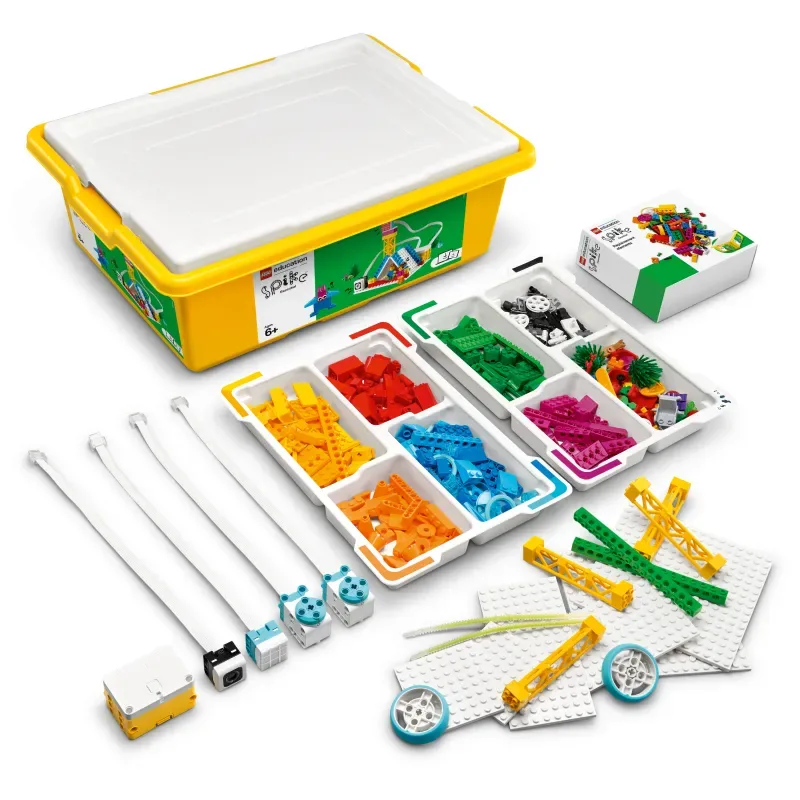
5. LEGO SPIKE Prime — $400
The serious engineering LEGO. For a 13-year-old deep in robotics or competing in FIRST LEGO League. Block-based coding extends to Python. Expensive but multi-year.
Budget alternative: LEGO SPIKE Essential at $290.
6. CrunchLabs Hack Pack Subscription — $24.99/mo
Teen-focused electronics monthly kit. Arduino-adjacent. Good for a kid who wants monthly hardware challenges. See our KiwiCo vs CrunchLabs piece.
7. Graphing Calculator (TI-84 Plus CE) — $120
A 13-year-old heading into Algebra II, Geometry, or Pre-Calculus in school benefits from owning their own graphing calculator. $120 is steep but the calculator lasts through college.
8. High-Quality Drafting / Technical Drawing Set — $60
Rotring pencils, architect’s scale, good drafting paper, drawing compass. For an art-plus-engineering-inclined teen. Signals “adult tools” clearly.
9. Celestron AstroMaster 70AZ Telescope — $150
Real beginner telescope. For an astronomy-interested 13-year-old who has used binoculars before. See our full telescope guide for context.
10. Celestron SkyMaster 15×70 Binoculars + Tripod — $120 combined
Alternative to a telescope. See our astronomy binoculars guide.
11. A Real Microscope — $100+
See our microscope for 10-year-old guide. At 13, the used Zeiss / Olympus student-microscope recommendation is especially relevant — multi-decade tool.
12. Quality Daily Driver Backpack ($80–$120) + Travel Water Bottle ($30) + Multi-Tool ($60)
Outside strict “STEM” but: an adult-quality backpack, water bottle, and multi-tool signal respect. For a 13-year-old who camps, hikes, or travels, a quality Leatherman Wave or Gerber Suspension multi-tool ($60–$120) combines practical utility with engineering-interest alignment.
Book Pairings
At 13, books should be genuinely adult-or-teen-level:
- A Short History of Nearly Everything by Bill Bryson — general science history
- The Disappearing Spoon by Sam Kean — chemistry
- Packing for Mars by Mary Roach — astronomy/biology (humor keeps it accessible)
- Invisible Women by Caroline Criado Perez — data + social science
- Mindset by Carol Dweck — the growth-mindset framework (adult book; 13-year-olds engage with it)
Skip kids’ biography series at this age.
What to Avoid at 13
- Anything marketed “ages 8+”. Immediately reads as young.
- Character-branded STEM kits. Licensing premium, not performance.
- “My First ___” anything. Age-inappropriate framing.
- Toy-aisle “chemistry” kits under $50. At 13, chemistry means real reagents or skip.
- Adult-rated products without adult-supervision context. A 13-year-old with a propane torch is not a gift; it’s a hazard.
A Combination at $250
For a maximally-serious-teen STEM setup:
- Arduino Starter Kit — $85
- Thames & Kosmos Chem C1000 — $100
- Good lab notebook + drafting supplies — $40
- Book pairing (The Disappearing Spoon) — $20
Total: $245. Real electronics + real chemistry + the adult-quality accessories that signal respect.
The Bottom Line
Default pick for a programming-inclined 13-year-old: Arduino Starter Kit ($85). Real tools, long horizon.
Default pick for chemistry-serious 13-year-old: Thames & Kosmos Chem C1000 or C2000 ($100–$150).
Serious robotics investment: LEGO SPIKE Essential or Prime ($290–$400).
Budget pick: Snap Circuits Classic SC-300 at $45 — still age-appropriate at 13 for electronics intro.
For adjacent ages, see STEM Gifts for 12-Year-Old and our Mel Science vs KiwiCo for Teens piece for teen subscription options.
Every product recommended has been reviewed in depth by our team or evaluated against published specifications.