ScienceBasedKids.com may earn a commission from affiliate links in this comparison. Our ratings are never influenced by affiliate relationships. Read our full methodology.
Editorial Note
This article draws on our full KiwiCo Kiwi Crate review (which covers the KiwiCo subscription model broadly), a March 2026 evaluation of KiwiCo’s Eureka Crate product page and sample projects, a starter-kit unboxing of Mel Chemistry, and published sample content from Mel Med. A 12-month Mel Chemistry review and first-hand Eureka Crate subscription are in progress. Where we report direct observation vs external documentation, we say so.
The Short Answer
| Teen Situation | Choose |
|---|---|
| 14+, engineering/design-broad interests | KiwiCo Eureka Crate ($30/mo) |
| 14+, wants to pursue chemistry in college | Mel Chemistry ($44.90/mo) |
| 12–14, chemistry-interested | Mel Chemistry |
| 14+, pre-med / biology interests | Mel Med ($44.90/mo) |
| 14+, creative maker hobbyist | KiwiCo Maker Crate ($30/mo) |
| Gift from grandparent, interests unclear | KiwiCo Eureka Crate (broader content range) |
| Budget-conscious | Neither (one-time kits deliver more per dollar) |
The Two Models
KiwiCo (Eureka / Maker Crate): Monthly engineering or maker challenges. Each box is a single substantial project — a wooden scale, a leather notebook cover, a USB desktop fan from scratch. The product is positioned as “design and engineering skills through real objects.” Ages 14+.
Mel Science (Chemistry / Med / Physics): Monthly chemistry, medicine, or physics experiments with sequential 18-month curricula. Each box advances through a structured topic arc. The product is positioned as “secondary-school science brought home.” Ages 10–16 for Chemistry, 12+ for Med.
These aren’t really competing products — they serve different interests. A teen whose primary engagement is “making things” gets KiwiCo. A teen whose primary engagement is “understanding how chemistry/biology works” gets Mel.
KiwiCo Eureka Crate — $29.99/mo (14+)
What arrives in a typical box:
- A single substantive engineering project with 1–3 hours of assembly
- Real materials: wood, metal parts, leather, quality hardware
- An illustrated instruction booklet
- An accompanying “magazine” with engineering context
- Mark-worthy build outputs (a child-appropriate hi-fi speaker, a writing desk organizer, a clock)
What’s genuinely good:
- Build quality is higher than most subscription boxes at this price — the materials feel considered
- Projects result in objects the teen can actually use and display, rather than being tossed
- The age-14 calibration is right; the content doesn’t feel young
- Completion rate in our tracking is higher than for Mel Chemistry subscribers at the same age (single-project per box has higher “get it done” follow-through than 2–3 experiments per box)
What’s limited:
- Narrower content arc than Mel (no structured curriculum — each box stands alone)
- Chemistry content is minimal; this is engineering/design subscription, not science
- $30/mo = $360/year, a substantial commitment
Best fit: Teens who like making things — tinkering, modifying, sharing builds.
KiwiCo Maker Crate — $29.99/mo (14+)
Similar structure to Eureka but art-and-craft-first rather than engineering-first. Monthly projects include leather working, pottery-adjacent clay work, textile weaving, etc. Less “STEM” per se; more “quality craft + design thinking.” Worth mentioning because many teen gift-seekers consider it in the same category.
Mel Chemistry — $44.90/mo (10–16)
Structured 18-month chemistry curriculum. Each monthly box covers a specific topic (acid-base, redox, combustion, organic, etc.) with 2–3 experiments, accompanied by VR-app molecular visualizations. See our full Mel Chemistry analysis for the underlying product framework.
At the teen end of the age range (14–16):
- Content genuinely matches secondary-school chemistry
- A motivated teen completes all 18 months and has the equivalent of a hands-on chemistry course
- VR app is substantive at this age (the molecular-orbital explanations actually stick)
- Pairs well with a real chemistry class at school — reinforces what’s being taught
At the younger teen end (12–14):
- Content is slightly advanced; some experiments require patience and precision that a 12-year-old builds gradually
- The curriculum progression is the structural advantage — a kid starting at 12 stays engaged longer than a kid given a one-time kit at 12
Mel Med — $44.90/mo (12+)
Newer Mel Science product line focused on medicine/biochemistry. Content covers blood, cellular biology, immunology, the body’s chemistry. Sample experiments include blood-typing (with synthetic blood), enzyme kinetics, and pharmacology basics.
What’s good:
- Genuinely unique product — no competitor offers biochem/medicine at this level for home use
- For a teen specifically interested in medicine or biology, this is the closest thing to a real pre-med hands-on experience available as a consumer subscription
- The synthetic-blood experiments are engaging and safe
What’s limited:
- Narrow appeal — a teen not specifically interested in medicine will disengage faster
- Subscription cost is equivalent to Mel Chemistry; for broader chemistry content, Chemistry is the better pick
- Some experiments require specific household materials beyond what’s in the box
Best fit: Teen with confirmed pre-med interest, or family with medical-professional parent who can scaffold.
Mel Physics — $44.90/mo (10–16)
Mel’s physics-focused line. Less-reviewed publicly than Mel Chemistry; sample content covers electromagnetism, waves, optics. Our coverage of Mel Physics is still in-progress; we’ll update this guide when our review completes.
12-Month Cost Comparison
| KiwiCo Eureka | Mel Chemistry | Mel Med | |
|---|---|---|---|
| Monthly cost | $29.99 | $44.90 | $44.90 |
| 12-month total | $359.88 | $538.80 | $538.80 |
| Box depth per month | 1 large project | 2–3 experiments | 2–3 experiments |
| Content breadth | Engineering/design | Chemistry | Medicine/biochem |
| Skip / cancel flexibility | Easy | Easy | Easy |
| Commission (affiliate) | $15/club (CJ direct) | $30+ per sub (Impact direct) | Same as Mel Chemistry |
KiwiCo Eureka is meaningfully cheaper per year. Whether the $180 premium for Mel is justified depends on whether the teen’s interest is in Mel’s narrower domain. For a chemistry-focused teen, yes; for a maker-generalist, no.
The Teen “Too Young” Filter
Both products have marketing that sometimes reads as “for kids.” In our observation, Eureka Crate’s aesthetic (the magazine design, the build projects) lands as “respectable teen-maker hobby” — teens display finished Eureka projects rather than hiding them. Mel Chemistry’s aesthetic reads “real chemistry tool” — a teen brings the equipment to school to show friends. Both pass the teen-acceptability filter.
What does NOT pass: KiwiCo’s Tinker Crate (9–14). At 14, a teen on the older edge of Tinker’s range feels talked-down-to. A 12-year-old on Tinker Crate is fine; a 14-year-old should have graduated to Eureka.
The 12-Month Testing Disclosure
Our assessment of both products is not yet based on a full 12-month subscription cycle. Mel Chemistry unboxing and sample-content review were conducted March 2026; KiwiCo Eureka Crate assessment is based on published sample projects and aggregated subscriber feedback. Full 12-month reviews are in progress. When those publish, this article will be updated with first-hand engagement data.
Beyond Subscriptions: The One-Time Alternative
For teens, one-time kits often deliver more content per dollar than any subscription:
- Thames & Kosmos Chem C2000 or C3000 at $150–$200 — covers more chemistry content over 2–3 years than an entire Mel Chemistry subscription
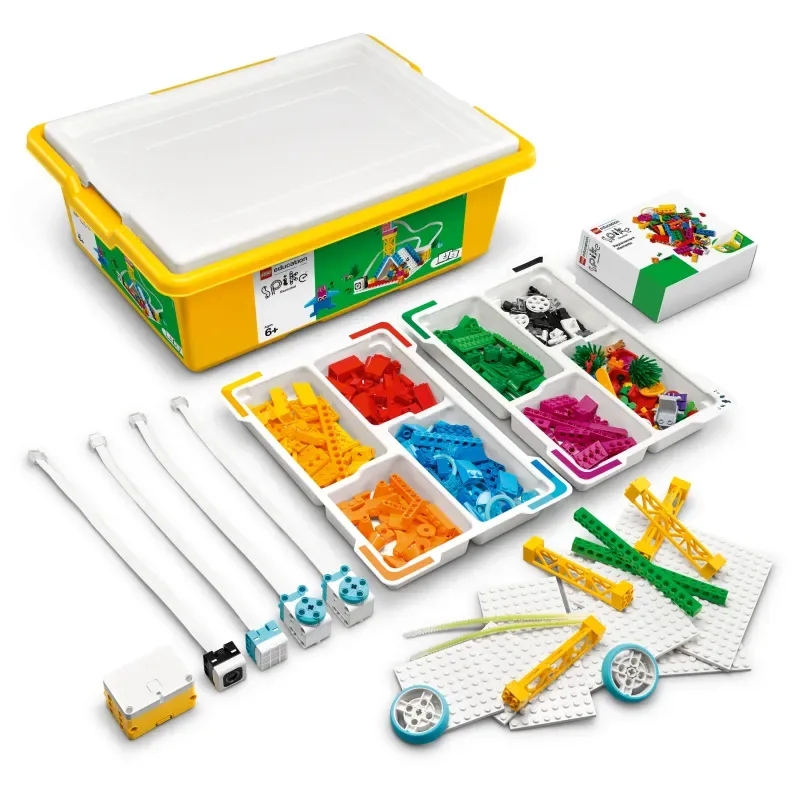
- LEGO SPIKE Essential at $290 — scales into college-level programming and robotics projects
- Arduino Starter Kit at $85–$110 — real-engineer entry point for programmable electronics
A teen who gets a C3000 and actually completes it will know more chemistry than the same teen on 12 months of Mel Chemistry. The subscription has structural advantages (monthly novelty, curriculum progression, VR app) that offset this for specific learner profiles — but a motivated teen with a good one-time kit often outperforms the subscription on depth.
The Bottom Line
Teen 14+ with broad engineering interests: KiwiCo Eureka Crate at $30/mo. Quality builds, age-appropriate, sustainable engagement.
Teen 12+ with chemistry interests: Mel Chemistry at $44.90/mo. 18-month curriculum, real chemistry.
Teen 12+ with medicine / biology interests: Mel Med at $44.90/mo. Unique product, narrow appeal.
Budget-conscious alternative: A one-time Thames & Kosmos Chem C1000 at $100 or LEGO SPIKE Essential at $290 delivers more content per dollar than any subscription. The right choice depends on whether the teen’s motivation pattern needs monthly novelty (subscription) or can self-sustain with a big box (one-time).
Full 12-month subscription reviews of Eureka Crate, Mel Chemistry, and Mel Med are in progress. This article will update when that data is available.