ScienceBasedKids.com may earn a commission from affiliate links in this article. Our ratings are never influenced by affiliate relationships. Read our full methodology.
What Makes a Toy Genuinely Montessori
The Montessori approach identifies several principles:
- Self-correcting — kid knows when task is done right (puzzle fits; pitcher doesn’t spill)
- Isolates one concept — doesn’t combine many skills simultaneously
- Natural materials — wood, metal, fabric; minimal plastic
- Aesthetically calm — no bright colors, flashing lights, sounds
- Real tools for real purposes — kid uses real pitcher, not toy one
Most “Montessori-style” toys fail 2+ of these. The “Montessori” label is heavily abused.
The Short Answer
| Age | Genuine Montessori STEM | Price |
|---|---|---|
| 0–1 | Wooden rattle, black-and-white cards | $25 |
| 1–3 | Pincer-grasp trays, nesting cups | $40 |
| 3–5 | Wooden puzzles, real measuring cups | $35 |
| 5–7 | Cuisenaire rods, golden beads | $60 |
| 7–10 | Lovevery Play Kits | $40–$120 |
| 7–10 | Real science tools (magnifier, scale) | $50 |
The Picks
For Babies and Toddlers (0–3)
Wooden teething rings + rattles — $20–$30. Real wood, no batteries.
Pikler triangle — $120–$300. Climbing apparatus; real gross-motor work. See Pikler vs Nugget comparison.
Pincer-grasp trays: Wooden tray with small wooden objects to pick up and sort. $30.
Water pouring pitchers: Real miniature pitchers for water-pouring practice. $25.
For Preschool (3–5)
Wooden puzzles (one concept each): Shape sorters, alphabet puzzles. $15–$25.
Sandpaper letters: Montessori-specific; teaches letter formation tactilely. $35.
Moveable alphabet: For pre-reading word-building. $40.
Real measuring cups + pitchers: Small real kitchen tools for practice. $20.
Color tablets: Montessori-specific color matching. $30.
For Early Elementary (5–7)
Cuisenaire rods: Colored wooden rods for math. $30.
Golden beads: Montessori math — tens, hundreds, thousands. $40–$80.
Wooden fraction circles: Physical fraction understanding. $20.
Nature study kit: Real magnifying glass + notebook + field guide. $30.
Sandpaper numerals: Tactile number formation. $25.
For Elementary (7–10)
Real science tools: Real stethoscope, thermometer, scale. $50.
Nature journals: Leather-bound or similar quality. $30.
Real wooden math manipulatives: See best math manipulatives.
Fine carpentry kits: Real woodworking hammer + nails + wood. $40.
Why Lovevery Specifically
Lovevery Play Kits ($40–$120/mo) are the most-Montessori of the subscription boxes:
- Natural materials (wood, fabric, cardboard)
- Self-correcting activities
- Age-calibrated to developmental milestone
- Calm aesthetic
- Real tools for real purposes
Ages 0–4 are their strongest years. See our KiwiCo vs Lovevery comparison.
What’s NOT Montessori (Despite Marketing)
- Most “Montessori-inspired” toys on Amazon: Plastic, bright colors, electronic.
- Loveloved activity boards covered in flashing lights.
- “Open-ended” toys with batteries (e.g., LEGO Duplo with sound effects).
- Bright-colored wooden toys with cartoonish characters.
- Apps marketed as “Montessori”: Fundamental contradiction — Maria Montessori predated screens; screens are not Montessori-compatible.
Montessori-Compatible Mainstream STEM Toys
Some mainstream toys meet Montessori criteria:
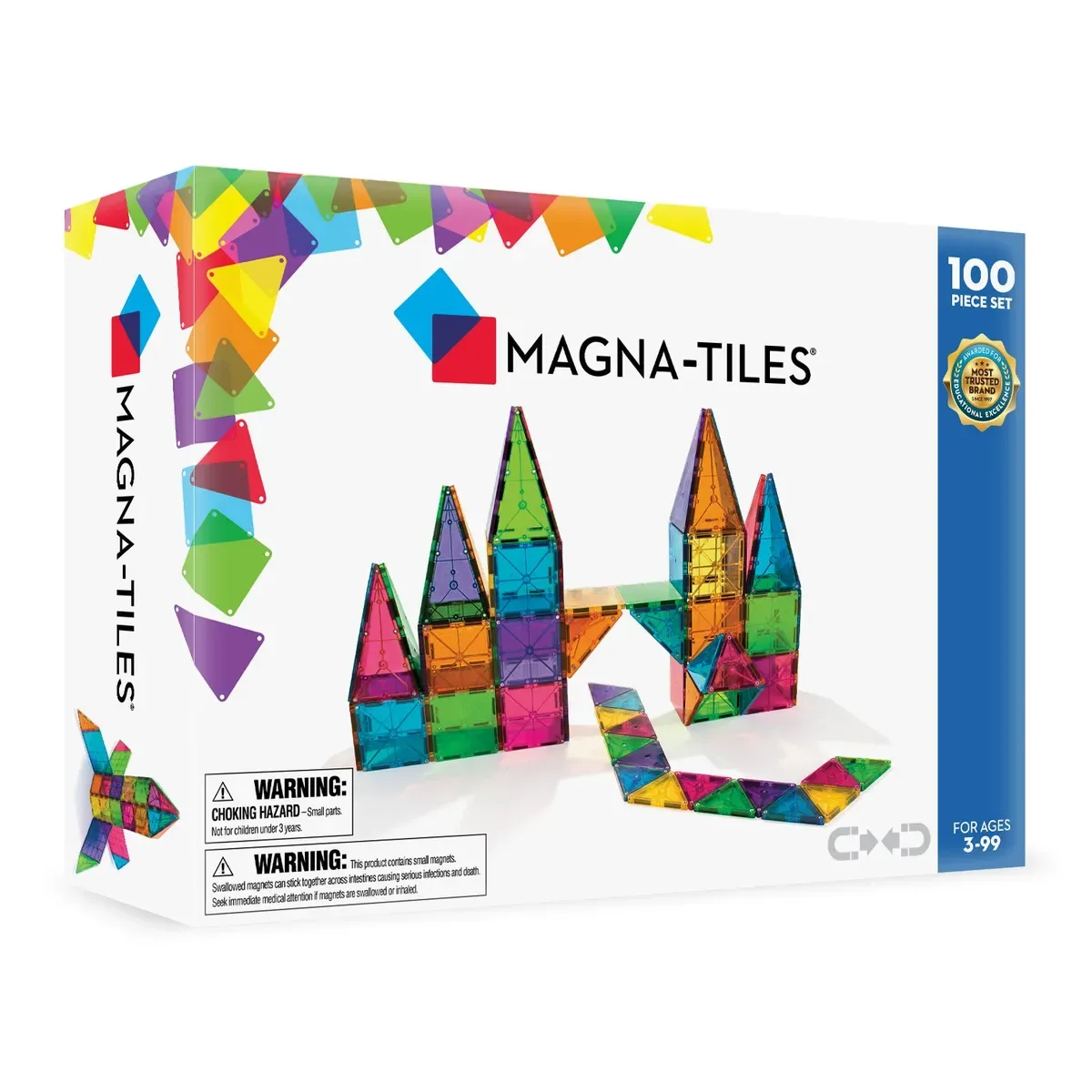
- Magna-Tiles: Natural (plastic but high-quality), self-correcting, open-ended — mostly Montessori-compatible
- Wooden marble runs (Hape Quadrilla): Natural materials, self-correcting — Montessori-compatible
- Snap Circuits: Plastic but self-correcting and concept-isolated — partially compatible
Full-plastic, battery-driven, apps-required kits fail Montessori criteria even if otherwise good.
Setting Up a Montessori-Style Home
For a Montessori-style home environment:
- Low shelves accessible to child
- Limited options at a time — 3–5 activities visible, rotate the rest
- Child-sized real tools (small broom, real measuring cups)
- Quiet space — not overwhelming decoration
- Natural light + neutral colors
This is a home-environment philosophy, not just a toy strategy.
Budget Planning
Baby/Toddler Montessori Starter ($80)
- Wooden rattles (1–2) — $25
- Pikler triangle OR pincer tray — $40
- Real mini pitcher + cups — $15
Preschool Montessori Starter ($120)
- Wooden puzzles (5) — $60
- Real measuring cups + pitcher — $25
- Nature magnifier + notebook — $20
- Pattern blocks (Montessori-compatible) — $15
Elementary Montessori Starter ($200)
- Cuisenaire rods — $30
- Golden beads basic set — $80
- Real science tools (scale, thermometer) — $50
- Nature journal — $30
- Field guide — $10
Homeschool Applications
Montessori principles align with many homeschool philosophies:
- Self-paced learning
- Hands-on exploration
- Multi-age stations
- Concrete-to-abstract progression
Montessori + traditional homeschool = Montessori homeschool. Some families use full Montessori curriculum (Trillium Montessori, Living Montessori Now); others adopt principles piecemeal.
Limitations to Recognize
Montessori isn’t a universal fit:
- Kids with significant ADHD may need more structure than pure Montessori
- Some kids thrive with high-energy, stimulating environments
- Subscription boxes (KiwiCo, Little Passports) aren’t Montessori but are excellent learning tools
Don’t let “Montessori” become gospel. Use principles where they help.
Related Guides
- KiwiCo vs Lovevery Comparison
- Pikler vs Nugget
- Best Math Manipulatives for Kids
- STEM Gifts for 3-Year-Olds
The Bottom Line
Genuine Montessori STEM at every age: Lovevery Play Kits (0–4) + real-tool versions of everyday objects (4+) + Cuisenaire rods (5–10).
Watch out for: “Montessori-style” branding without genuine Montessori principles.
Partial compatibility: Many mainstream STEM toys work (Magna-Tiles, wooden marble runs) even without the label.
Budget: $80–$250 for a solid Montessori-compatible STEM setup per age stage.
Montessori is a useful framework, not a religion. Apply principles; skip the branding.
Evaluated against Montessori principles as articulated by the Association Montessori Internationale.