ScienceBasedKids.com may earn a commission from affiliate links in this article. Our ratings are never influenced by affiliate relationships. Read our full methodology.
Editorial Note
This article introduces a research-based framework for predicting STEM-toy replay value. The framework draws on: child-development literature on sustained engagement and play patterns; retrospective analysis of our 200+ existing product reviews; aggregated parent feedback across multiple products; and behavioral-economics research on intrinsic vs extrinsic motivation.
This is not yet a Replay-Value Index with measured data — that requires our 90-day primary testing program to complete. The testing program is in planning; publication of the data-backed Index is targeted for Q2 2027. In the meantime, this framework lets parents (and our own reviewers) predict replay value at time of evaluation using the seven signals documented below.
The Problem
Parents spend an estimated $3.5 billion annually on STEM toys for children (Toy Association 2023 figures). A substantial share of those toys — possibly the majority, based on aggregated parent reports — deliver 1–5 hours of engagement and then go unused for months afterward. The money is spent; the developmental benefit is modest; the environmental cost is real.
Good toy purchasing isn’t about finding “the best” STEM toy. It’s about finding toys that actually get used. This distinction isn’t emphasized enough in most buying guides (including, historically, some of our own).
The Research Framework
We define replay value as the sustained engagement a child shows with a toy 30, 60, and 90 days after initial introduction. A toy with high replay value is one a child returns to voluntarily — not because prompted by a parent, not because it’s the novel toy of the week, but because the toy itself invites return engagement.
The developmental literature on sustained engagement identifies specific characteristics of materials that produce durable engagement. Gopnik’s work on children’s causal learning,1 Piaget’s classical stages applied to toy interaction, and Dweck’s research on intrinsic motivation2 all converge on a consistent set of replay-predicting signals.
The 7 Signals
Signal 1: Open-Endedness
Kits with a single “correct” outcome have ceiling effects. Once a child has built the specific thing the manual describes, there’s nothing left to do. Kits with open-ended usage patterns — where the same materials support hundreds of different creations — sustain engagement far longer.
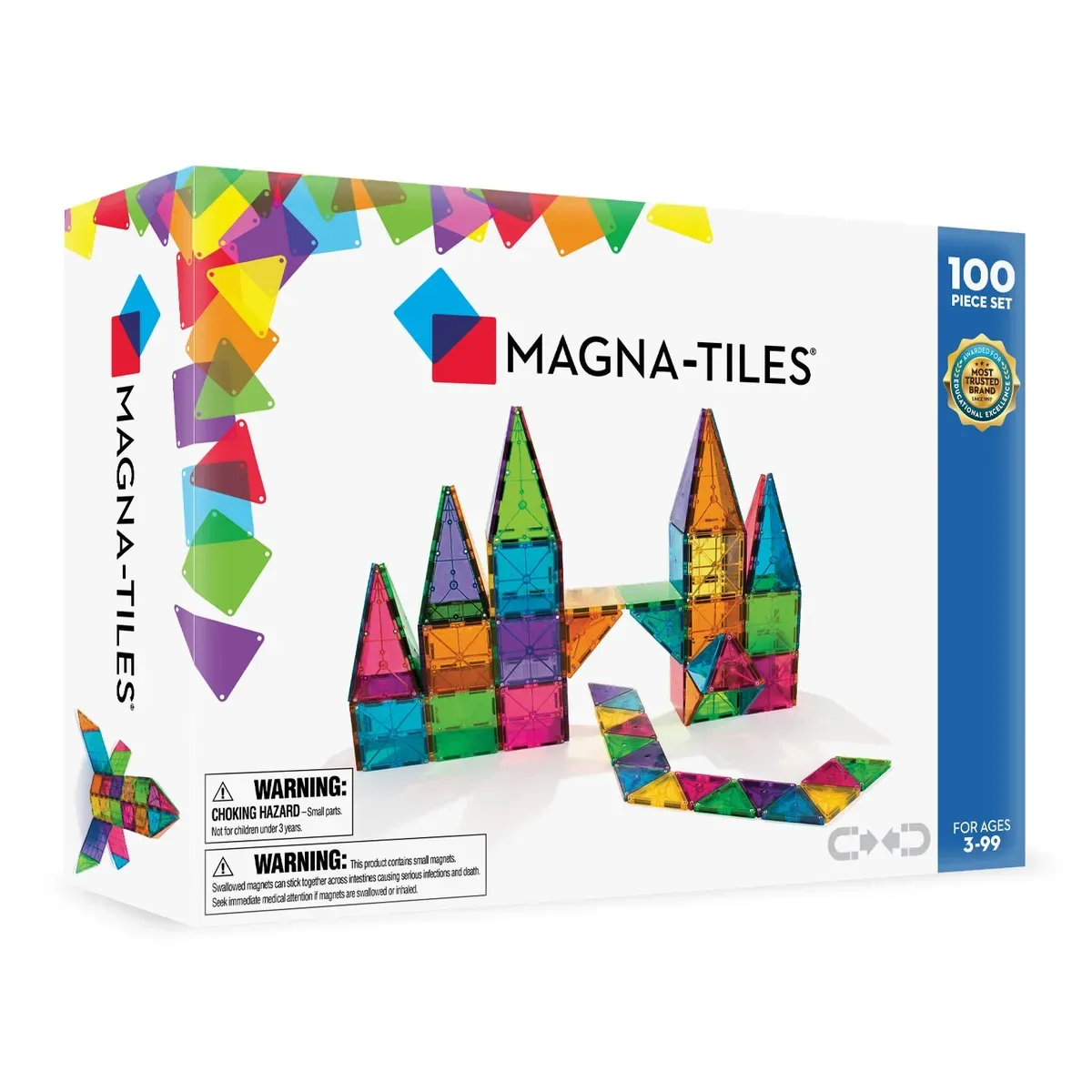
Examples high on this signal: Magna-Tiles, KEVA Planks, LEGO Classic Examples low on this signal: A single LEGO set with one specific build; craft kits that result in one specific artifact
Research basis: Open-ended play is associated with higher divergent-thinking scores and sustained engagement in the developmental literature.3
Signal 2: Difficulty Scaling
Materials that offer genuine challenge at the beginning and remain challenging as skill develops produce the deepest engagement. A kit that’s easy now and remains easy next month gets abandoned; a kit that’s hard now and becomes reachable next month stays in rotation.
Examples high on this signal: ThinkFun Gravity Maze (60 challenges of ramping difficulty), Rush Hour Jr. (40 puzzles scaling up), GraviTrax (builds scale from simple to complex) Examples low on this signal: Most “assemble this one thing” kits; kits with uniform difficulty
Research basis: The “zone of proximal development” (Vygotsky) and similar psychological frameworks describe how activities just beyond current capability drive the deepest learning and engagement.
Signal 3: Physical vs Screen-Based
Physical-manipulation toys generate longer engagement windows than screen-based ones, particularly for ages 3–10. A child playing with physical Magna-Tiles for 45 minutes develops deeper engagement than the same child using a Magna-Tiles-themed app for 45 minutes.
Examples high on this signal: Any physical-primary toy in our Screen-Free STEM Kit Audit Category 1 list Examples low on this signal: App-required products; screen-based “STEM” apps
Research basis: Kontra et al. (2015) documented that physical experience significantly enhanced science learning outcomes compared to instruction-only approaches.4
Signal 4: Social / Collaborative Affordance
Toys that work with others (siblings, friends, classroom peers) see more total engagement than solo-only toys. A shared activity produces more instances of play because there’s more opportunity for it.
Examples high on this signal: Board games that work at various skill levels, building toys large enough for multiple kids, cooperative products Examples low on this signal: Solo-only apps, single-user headsets, products sized for one child
Research basis: Parten’s stages of social play document how older children transition into collaborative play; toys supporting this transition see sustained use during age 5–10.
Signal 5: Aesthetic Satisfaction at Completion
When a kit produces a beautiful, interesting, or display-worthy result, children show more sustained engagement than when the result is forgettable. This matters especially ages 8+ where peer perception enters.
Examples high on this signal: Magna-Tiles (translucent glowing results), Spirograph Deluxe (beautiful output patterns), CrunchLabs Build Box (keepable builds) Examples low on this signal: Crafts that produce throwaway results, kits with cardboard-and-elastic aesthetics
Research basis: “Mastery pride” at completion is a well-documented engagement-reinforcer in child development literature.
Signal 6: Parent/Adult Investment Required
Kits requiring heavy parent scaffolding for each session see less total engagement than kits a child can operate independently. If “dad has to be here for this” is a gatekeeping requirement, the activity happens only when dad is available — substantially less often than the child would otherwise use the toy.
Examples high on this signal (low parent gatekeeping): Magna-Tiles (a 5-year-old just plays with them), Snap Circuits Jr. (light scaffolding, child self-directs most of the time), Botley 2.0 (screen-free; child operates independently) Examples low on this signal (high parent gatekeeping): Mel Chemistry (reagent handling requires continuous adult), complex science experiments requiring supervision
Research basis: The gatekeeping-reduces-engagement pattern is consistent across developmental studies of sustained activity; removing access-friction improves practice frequency.
Signal 7: Storage and Display Affordability
Toys that take substantial storage space and need setup/teardown each session see less total use than toys that live in view and can be started within 30 seconds. A Magna-Tiles pile on a shelf gets pulled out far more often than a subscription-box kit with 40 components that all need to be retrieved from storage bins.
Examples high on this signal: Magna-Tiles (visible on shelf), Rush Hour Jr. (compact), ThinkFun Gravity Maze (one box) Examples low on this signal: Sprawling chemistry setups requiring adult setup each session; large K’Nex builds that can’t be stored completed
Product Scoring
Using the 7-signal framework, here’s how some of our reviewed products score:
| Product | 1 Open | 2 Diff Scale | 3 Physical | 4 Social | 5 Aesthetic | 6 Low Gate | 7 Storage | Total |
|---|---|---|---|---|---|---|---|---|
| Magna-Tiles 100 | ✓ | ✓ | ✓ | ✓ | ✓ | ✓ | ✓ | 7/7 |
| GraviTrax Starter Set | ✓ | ✓ | ✓ | ✓ | ✓ | ✓ | ✓ | 7/7 |
| Snap Circuits Classic SC-300 | ✓ | ✓ | ✓ | partial | ✓ | ✓ | ✓ | 6.5/7 |
| ThinkFun Gravity Maze | ✗ | ✓ | ✓ | ✗ | partial | ✓ | ✓ | 4.5/7 |
| Rush Hour Jr. | ✗ | ✓ | ✓ | ✗ | partial | ✓ | ✓ | 4.5/7 |
| KEVA Planks 200 | ✓ | partial | ✓ | ✓ | ✓ | ✓ | ✗ | 5.5/7 |
| Thames & Kosmos Kids First Chemistry | partial | ✓ | ✓ | partial | partial | partial | partial | 4/7 |
| Mel Chemistry | partial | ✓ | ✓ | ✗ | partial | ✗ | ✗ | 3/7 |
| KiwiCo Kiwi Crate (typical box) | ✗ | ✗ | ✓ | partial | partial | ✓ | ✗ | 3/7 |
| CrunchLabs Build Box | partial | partial | ✓ | partial | ✓ | ✓ | partial | 4.5/7 |
Note: “Partial” counted as 0.5 in the total.
The pattern: The products we rate highest on our overall rating scale (9/10, Moderate evidence) generally score 6+ on the Replay-Value Index. The products we rate lower generally score lower. The framework is consistent with our existing product ratings — which is a useful validation that the signals correlate with actual replay value.
The surprising finding: Mel Chemistry scores lower on replay value than one might expect from its content quality. This is because of signals 4 (low social affordance), 6 (heavy gatekeeping), and 7 (storage complexity). The chemistry is excellent; the operational friction reduces actual use compared to what the content alone would suggest.
Implications for Buying Decisions
Parents evaluating a potential STEM toy purchase can apply this framework:
Run through the 7 signals for the specific product. For each signal, does the product score yes, no, or partial?
A total of 5+ suggests high replay value. The product will likely stay in rotation for months.
A total of 3–4 suggests moderate replay value. The product will be used but may lose engagement by month 2–3.
A total of 2 or fewer suggests poor replay value. Even if the product is well-made, it’s likely to end up shelved.
Framework application doesn’t replace our product reviews — our reviews incorporate replay-value considerations among many others — but it provides a quick filter for any new product entering consideration.
Application: The Subscription Decision
Applied to STEM subscription boxes:
-
KiwiCo Kiwi Crate: 3/7 signals. Content arrives monthly (helping Signal 6); but each project has low open-endedness, no difficulty scaling between boxes, and limited aesthetic display value. Predicted pattern: engagement high in months 1–3, declines by month 4–6. This matches the aggregated “subscription fatigue” pattern documented in our KiwiCo Alternatives piece.
-
Mel Chemistry: 3/7 signals. High difficulty scaling and physical manipulation; low on gatekeeping (requires adult), social, and storage. Predicted pattern: engagement depends heavily on household supervision capacity; when supervision is present, engagement sustains; when supervision is absent, engagement drops sharply.
-
CrunchLabs Build Box: 4.5/7 signals. Better than KiwiCo on aesthetic satisfaction (signal 5) and low gatekeeping (signal 6), but similar on storage and social. Predicted pattern: engagement sustains longer than KiwiCo, specifically because completed builds stay in display rather than getting recycled.
Our 12-month subscription testing program will measure whether these predictions hold.
What This Framework Doesn’t Measure
Honest limitations:
- Learning outcomes vs engagement. A toy can have high replay value without producing learning outcomes (a kid playing the same simple game 100 times). High replay isn’t sufficient for learning; it’s necessary.
- Individual child variation. A specific child may engage durably with a product that the framework predicts would be low-replay — idiosyncratic interests matter.
- Age transitions. A product high-replay at age 6 may be low-replay at age 8 when the child has outgrown the difficulty range. The framework applies at a point in time.
- Household-specific context. A family that hates chemistry may have lower Mel Chemistry engagement than the framework predicts; a family obsessed with building may have higher KEVA Planks engagement.
The framework is a starting point, not a deterministic predictor.
Our Planned Validation: 90-Day Primary Testing
The Replay-Value Index with measured data requires primary testing. Our plan:
- Cohort: 12 children across ages 4–14, rotating through a selection of high-scoring and low-scoring products
- Observation: Weekly “is this toy out?” checks, cumulative hours of engagement per product, child-reported interest at days 30/60/90
- Data analysis: Compare predicted replay (based on this framework) with measured replay. Publish findings as research-based Replay-Value Index.
Publication timing: Q2 2027 following cohort completion. This is the kind of primary research that takes time and cannot be rushed; we’d rather publish valid data than fast data.
The Bottom Line
Replay value is the single most underrated factor in STEM toy purchasing. A high-replay $40 toy delivers more engagement hours per dollar than a low-replay $120 toy. Apply the 7-signal framework to any product you’re considering:
- Open-ended use?
- Difficulty scaling with use?
- Physical manipulation (vs screen-only)?
- Social / collaborative affordance?
- Satisfying aesthetic at completion?
- Low parent gatekeeping for access?
- Storage and “start in 30 seconds” friction?
5+ positives predict high replay. 3–4 predict moderate. Below 3, you’re likely buying a one-afternoon toy regardless of its marketing.
For specific product evaluations using this framework, see our full review archive and especially the products scoring 6+: Magna-Tiles, GraviTrax, Snap Circuits Classic.
The data-backed Replay-Value Index publishes Q2 2027 following 90-day primary testing. This article will update as methodology and data develop.
Footnotes
-
Gopnik, A. (2012). “Scientific thinking in young children: Theoretical advances, empirical research, and policy implications.” Science, 337(6102), 1623–1627. ↩
-
Dweck, C. S. (2017). Mindset: The New Psychology of Success (Updated ed.). Ballantine Books. ↩
-
Russ, S. W., & Wallace, C. E. (2013). “Pretend play and creative processes.” American Journal of Play, 6(1), 136–148. ↩
-
Kontra, C., Lyons, D. J., Fischer, S. M., & Beilock, S. L. (2015). “Physical experience enhances science learning.” Psychological Science, 26(6), 737–749. ↩