ScienceBasedKids.com may earn a commission from affiliate links in this article. Our ratings are never influenced by affiliate relationships. Read our full methodology.
The Fundamental Difference
LEGO is a flexible brick-based building system. Rectangular plastic bricks snap together via studs-and-tubes connections. Builds rely on vertical stacking and horizontal assembly. A typical LEGO creation is a solid, house-like or vehicle-like structure. LEGO’s ecosystem supports thousands of sets, from simple 4+ kits to adult-scale Technic engineering models.
K’NEX is a rod-and-connector building system. Plastic rods of varying lengths connect via multi-slot connectors that allow triangulated, open-framework structures. Builds are typically skeletal — ferris wheels, roller coasters, cranes, towers with exposed truss work. K’NEX excels at structures with moving parts (gears, chain drives, motorized wheels).
Both are excellent building toys. They produce different kinds of builds, teach different aspects of engineering, and suit different child interests.
The Short Answer
| Child Profile | Choose |
|---|---|
| Age 1.5–5, first building toy | LEGO Duplo |
| Age 4–10, first building toy | LEGO Classic |
| Already has LEGO; wants different vocabulary | K’NEX |
| Loves Ferris wheels, roller coasters, moving structures | K’NEX |
| Into brick-city building, pretend play with structures | LEGO |
| Serious engineering focus (ages 8+) | K’NEX Education sets or LEGO Technic |
| Homeschool curriculum supplement | K’NEX Education |
| Budget ceiling $30 | LEGO Classic Medium ($30) |
| Budget $80+ for substantial build | LEGO Creator 3-in-1 or K’NEX Education 70 Model |
Our Product Coverage
We have full reviews of:
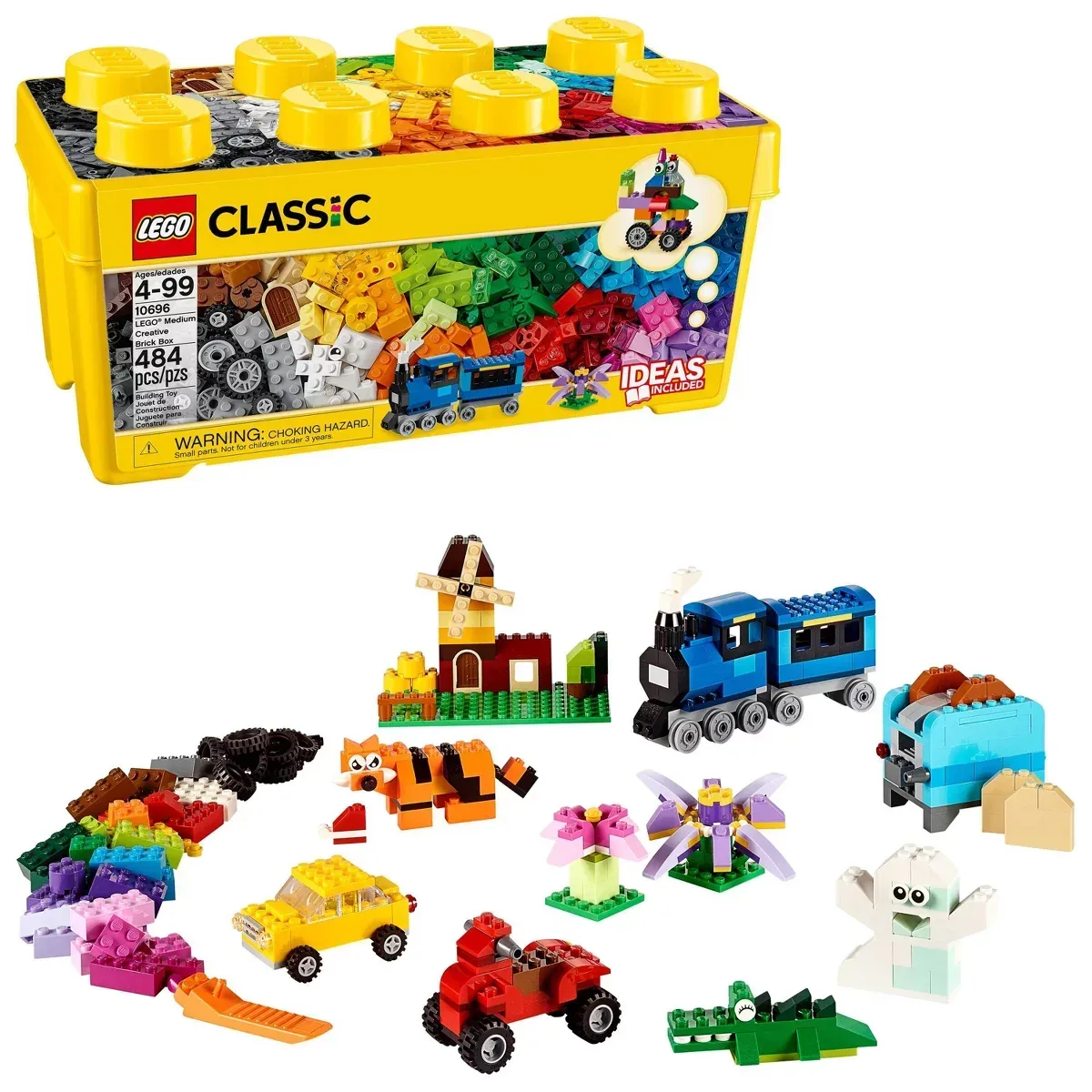
- LEGO Classic Medium Creative Brick Box — $30
- LEGO Duplo Classic — $50
- LEGO Friends Treehouse — $75
- LEGO SPIKE Essential — $290
- Duplo Steam Train — $90
K’NEX is less covered in our archive (category coverage ongoing). This comparison draws on published K’NEX specifications, aggregated buyer reviews, and our editorial experience with the product category broadly.
What LEGO Does Well
Ecosystem Breadth
LEGO’s catalog contains 400+ active sets across themes: City, Friends, Technic, Architecture, Ninjago, Star Wars, Harry Potter, Minecraft, Disney. This breadth creates a “LEGO set matches nearly every child’s interest” effect that K’NEX can’t match.
Compatibility Across Themes
A LEGO brick from 2024 connects to a LEGO brick from 1980. Any set can combine with any other set. A family that’s been buying LEGO for years ends up with a compounding library — far more valuable than any single set’s contents.
Instruction-Book Quality
LEGO’s instruction books are the industry standard. Step-by-step diagrams are clear, errors are rare, and kids learn to “follow a build” by completing LEGO sets. This translates into following-instructions skills that generalize beyond LEGO.
Age Progression Breadth
LEGO Duplo (1.5–5) → LEGO Classic (4–10) → LEGO City/Friends (6–12) → LEGO Technic (10–adult) → LEGO SPIKE (8+) provides a clean 18-year progression. A family that starts with Duplo at age 2 can continue buying LEGO products meaningfully for the next 15 years.
Pretend Play Support
LEGO builds naturally serve as pretend-play backdrops. Minifigures, specific-theme details (the ice cream truck, the dragon cave, the treehouse), and recognizable shapes support the kind of symbolic play that matters at ages 5–8.
What K’NEX Does Well
Mechanical Engineering Specificity
K’NEX pieces excel at structures LEGO can’t build easily: triangulated towers, gear-driven mechanisms, chain-driven systems, rotating platforms. A child building a working Ferris wheel from K’NEX is encountering mechanical-engineering concepts (axles, gears, balance, rotation) directly.
Triangulation and Truss Work
K’NEX rods naturally support triangulated structures. Triangulation is a fundamental engineering concept (the strongest geometric shape) that K’NEX demonstrates through its connection model. LEGO bricks don’t teach this as directly.
Educational Sets (K’NEX Education Line)
K’NEX Education produces classroom-focused sets specifically for STEM curriculum: “Renewable Energy,” “Simple Machines,” “Intro to Structures,” etc. Each set comes with lesson plans tied to NGSS Performance Expectations (see our NGSS-by-grade STEM toy map). For homeschool families and classroom teachers, this educational positioning is stronger than most LEGO educational products.
Larger, More Imposing Builds
K’NEX sets at $50–$100 can build 4-foot-tall Ferris wheels or 6-foot roller coasters — a scale LEGO at the same price can’t reach. The visual “wow” factor of completing a K’NEX build is often higher.
Motorized Additions
K’NEX motorized elements (battery packs, motors) integrate naturally with the rod-and-connector system. Motorized LEGO builds typically require Technic-level complexity; K’NEX’s motor-ready design is more accessible for younger kids.
Where Each Falls Short
LEGO
- Limited for truss/skeletal builds. Brick-based systems don’t naturally produce open-frame structures. K’NEX wins here.
- Motor integration is complex. LEGO’s motor options are in the Technic line (age 10+) or SPIKE (requires app). Not accessible at younger ages.
- Price per piece is high for specialty pieces. A specific minifigure, door, or wheel piece in LEGO is expensive; K’NEX’s more limited piece types reduce this premium.
- Small parts are choking hazards. LEGO’s 4+ rating assumes a child no longer mouths objects; younger siblings in the house are a concern.
K’NEX
- Ecosystem is shallower than LEGO’s. Fewer themes, fewer crossovers, less integration with “brand” interests.
- Brand cachet is lower. A 10-year-old gifted K’NEX won’t get the same reaction as LEGO. Peer perception matters.
- Durability over decades is untested vs LEGO’s documented multi-generation longevity. LEGO 50 years old still works; K’NEX 25-year-old pieces show more wear.
- Instruction books are good but not LEGO-tier. Step-by-step quality is lower on average.
- Limited pretend-play support. A K’NEX Ferris wheel is an object; it doesn’t come with figures, themed accessories, or fantasy settings.
Cost Comparison
| LEGO Classic Medium | K’NEX 70 Model Building Set | LEGO Creator 3-in-1 (medium) | K’NEX Education Simple Machines | |
|---|---|---|---|---|
| Price | $30 | $50 | $40–$80 | $160 |
| Piece count | 484 | 705 | 200–650 | 200+ |
| Project count | Open-ended (unlimited) | 70 models in book | 3 (per 3-in-1 concept) | ~15 guided projects |
| Age range | 4–10 | 7–12 | varies | 8–14 (classroom) |
| Primary learning | Open-ended building | Mechanical assembly | Convergent build | Simple machines curriculum |
Per-piece cost is roughly comparable at the entry level ($0.05–$0.15 per piece); higher-tier K’NEX Education sets command a premium for the curriculum component.
Age Fit
Ages 1.5–5: LEGO Duplo. K’NEX pieces are too small and the assembly is too fine-motor-demanding for this age. For younger children, there’s no contest — LEGO Duplo or Mega Bloks First Builders is the fit.
Ages 4–8: LEGO Classic or LEGO City. K’NEX is accessible at 6+ but the “cool factor” at 4–8 is typically LEGO.
Ages 8–12: Peak overlap. Both products fit. Decision depends on child’s interests:
- Pretend play / specific themes / brand interests → LEGO
- Mechanical / engineering / moving builds → K’NEX
Ages 12+: LEGO Technic for advanced engineering; Arduino or similar for electronics-plus-mechanical. K’NEX at this age is often “too-young-feeling” for peer perception.
When to Get Both
Many families end up with both products eventually. If budget allows, the one-LEGO-one-K’NEX combination covers different engineering vocabularies:
- LEGO Classic Medium ($30) + K’NEX 70 Model Building Set ($50) = $80 total
- Covers brick-based and rod-based building
- Different build mechanics, different skills reinforced
- A year of varied construction play for under $100
This is a better investment for an engineering-curious kid than $80 of LEGO alone.
What the Research Says
Construction-play research broadly supports both building-toy categories. Block play (LEGO-adjacent) has the strongest spatial-reasoning evidence base, documented in Verdine et al. (2014) and similar studies.1 Rod-and-connector systems like K’NEX have less specific research but share the underlying pedagogical model (hands-on spatial construction supports later mathematical and engineering reasoning).
The practical implication: either product delivers the research-supported developmental benefits of construction play. Specific product choice matters less than the child actually engaging sustainably with whatever they have.
The Bottom Line
First building toy, most kids: LEGO Duplo (ages 1.5–5) or LEGO Classic (ages 4–10). Ecosystem compounding is the deciding factor.
Second building toy, or engineering-oriented child: K’NEX 70 Model Building Set or similar. Different vocabulary, different skills.
Classroom/homeschool STEM: K’NEX Education Simple Machines ($160) or K’NEX Education Intro to Structures (~$100). Better curriculum integration than LEGO’s education products for specific engineering topics.
For pure brand cachet: LEGO. The social/peer/display value of LEGO is real and matters to many kids.
Our product coverage leans heavier on LEGO than K’NEX in the current archive. Full K’NEX product reviews are in progress and will link here as they publish.
Footnotes
-
Verdine, B. N., Golinkoff, R. M., Hirsh-Pasek, K., Newcombe, N. S., Filipowicz, A. T., & Chang, A. (2014). “Deconstructing building blocks: Preschoolers’ spatial assembly performance relates to early mathematical skills.” Child Development, 85(3), 1062–1076. ↩