ScienceBasedKids.com may earn a commission from affiliate links in this article. Our ratings are never influenced by affiliate relationships. Read our full methodology.
Editorial Note
This article synthesizes published Safety Data Sheets (SDS) for hydrogen peroxide at multiple concentrations, the American Academy of Pediatrics’ recommendations on household chemical exposure for children, CPSC recall database searches for peroxide-related incidents in children’s chemistry kits, and aggregated classroom-chemistry guidance from secondary-school chemistry educators. It is an authority piece extending our ASTM F963 chemistry-set safety guide.
Why This Guide Exists
“Elephant toothpaste” is probably the single most-watched chemistry demonstration on YouTube. A bottle of hydrogen peroxide meets a potassium iodide solution or a catalyst, and the peroxide decomposes rapidly into water and oxygen gas — trapped in dish soap, the reaction produces a foamy, fast-expanding column that looks dramatic and works well for video content.
The problem: most viral elephant-toothpaste videos use 30–35% hydrogen peroxide, which is dangerous at skin-contact levels. The same demonstration with 3% drugstore peroxide is safe but visibly less dramatic. A parent or teacher preparing a classroom demo, copying what they saw online, may not realize the tutorial used a concentration that isn’t appropriate for the setting they’re in.
This guide sorts peroxide concentrations into safety tiers and explains what to use at what age.
The Concentration Tiers
3% Hydrogen Peroxide — “Drugstore”
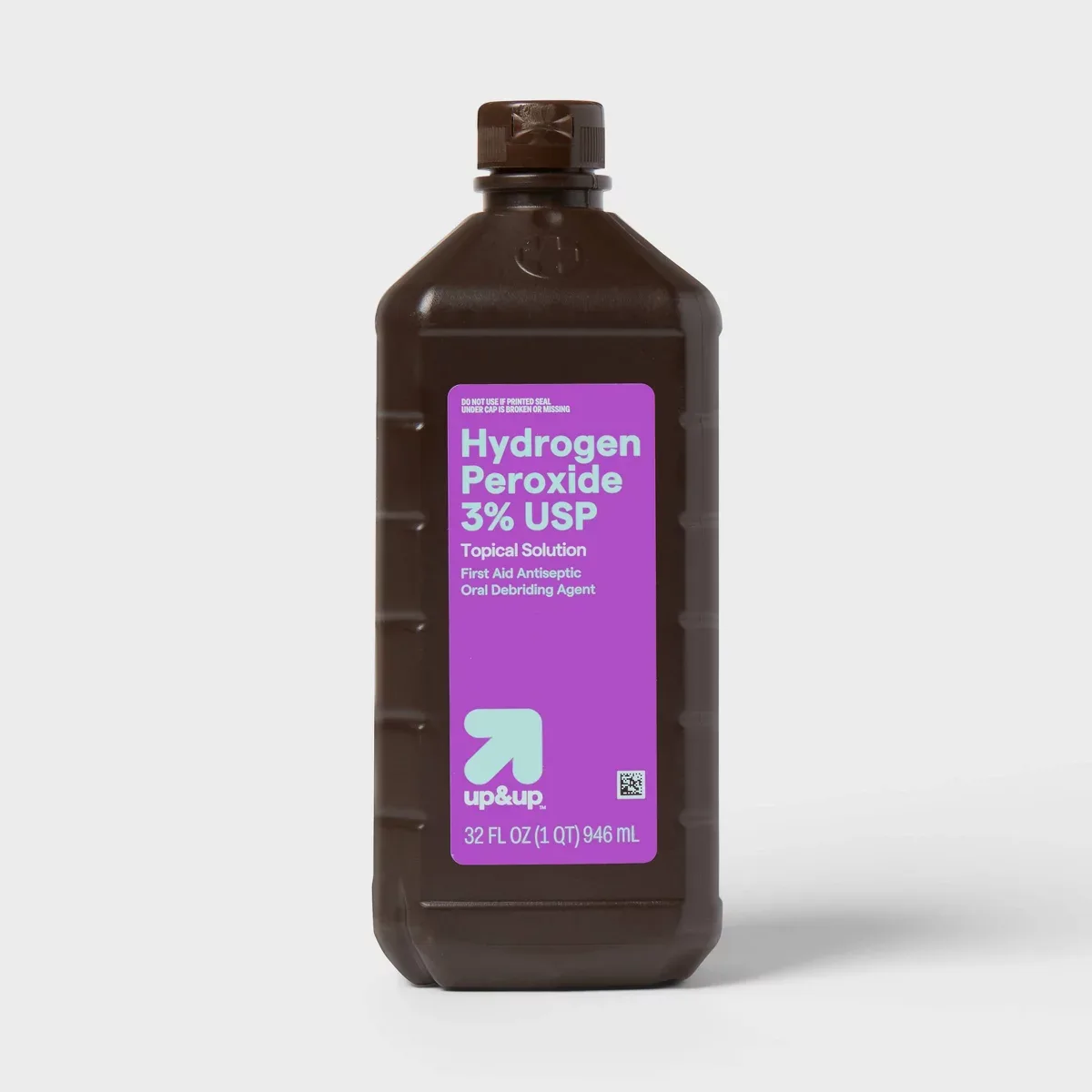
What it is: The brown-bottle peroxide sold at every pharmacy. Marketed as a topical antiseptic and household cleaner.
Safety profile:
- Oral toxicity: Mild. Swallowing a small amount causes foaming at the mouth and mild GI irritation, but generally doesn’t require medical attention beyond water and observation. Called “a minor exposure” by poison control for small ingestions.
- Skin contact: Safe. May cause temporary whitening of skin (due to oxygen bubbles in skin capillaries), resolves in minutes.
- Eye contact: Moderate irritant. Rinse with water for 15 minutes; seek medical attention if irritation persists.
- Storage: Opaque container (degrades in sunlight). Normal household storage.
Appropriate for: Any age with supervision. Genuinely safe for preschool chemistry experiments.
6% Hydrogen Peroxide — “Salon”
What it is: Hair-bleaching concentration, sold at beauty supply stores. Labeled “20 volume” in the cosmetic industry (volumes = %/3.03, so 20 volume ≈ 6%).
Safety profile:
- Oral toxicity: Moderate. Small ingestions cause significant GI irritation and foaming; medical consultation recommended.
- Skin contact: Causes temporary chemical whitening and mild burns on prolonged contact. Rinse immediately.
- Eye contact: Significant irritant. Medical attention needed.
- Storage: Locked storage required in households with young children; the brown bottle can look like drugstore peroxide to a child.
Appropriate for: Ages 10+ with committed adult supervision, goggles, and a dedicated work surface. Not for preschool. Appropriate for supervised middle-school chemistry demonstrations.
12% Hydrogen Peroxide — “Strong Salon” / “40 Volume”
What it is: Higher-strength hair bleach. Available at beauty supply stores but generally requires adult purchase.
Safety profile:
- Oral toxicity: Significant. Ingestion produces burning and can cause mucosal damage. Medical attention required.
- Skin contact: Causes chemical burns on any prolonged contact. Rinse immediately and monitor for irritation.
- Eye contact: Serious. Medical attention mandatory.
- Storage: Locked, clearly labeled, away from household cleaners (don’t mix with bleach).
Appropriate for: Not for children’s chemistry at any age. Appropriate only for adult-led demonstrations with explicit safety briefing and eye protection for observers.
30% Hydrogen Peroxide — “Lab Grade”
What it is: The concentration used in most viral elephant-toothpaste videos and in some chemistry subscription kits (Mel Chemistry includes this concentration in specific experiment boxes, with explicit safety documentation).
Safety profile:
- Oral toxicity: High. Even small ingestions require emergency medical attention.
- Skin contact: Causes chemical burns within seconds. Whitening of skin is immediate, followed by irritation that can persist for hours. Rinse extensively.
- Eye contact: Severe. Can cause permanent eye damage. Mandatory goggles for anyone in the room.
- Vapor: The liquid itself releases low levels of vapor; prolonged exposure in enclosed spaces causes respiratory irritation.
- Storage: Laboratory-grade storage — locked cabinet, away from any fuel source (peroxide is an oxidizer and can intensify fires), dedicated pouring container.
Appropriate for: Adult-led demonstrations only. Age 14+ may safely participate as observer with goggles and at minimum 6-foot distance. Not appropriate for active handling by children under adult education/supervision context.
The Elephant Toothpaste Question
Classic viral version (adult-appropriate, dramatic):
- 30–35% hydrogen peroxide (~100 mL)
- Potassium iodide catalyst (KI solution, concentrated)
- Dish soap (for bubble trapping)
- Food coloring
Produces a foam column 3–6 feet tall in seconds. Highly exothermic — the container gets hot. The reaction is too fast and too vigorous for children to stand near.
Kid-safe version (preschool through elementary):
- 3% hydrogen peroxide (1/2 cup from drugstore bottle)
- Active yeast (3 packets, dissolved in warm water — yeast catalyzes the reaction slowly instead of instantly)
- Dish soap
- Food coloring
Produces a column 6–12 inches tall over 1–2 minutes. Mildly warm. Safe for kids to stand near and observe. Shows the same chemistry (peroxide decomposition into water + oxygen, trapped in dish soap) at a slower pace and smaller scale.
Classroom middle-school version (requires committed supervision):
- 6% hydrogen peroxide (~50 mL)
- KI catalyst (small amount)
- Dish soap
- Goggles mandatory for everyone in room
- Tray to contain spillover
Produces a column 1–2 feet tall, slightly warm. Appropriate for ages 11+ with a teacher present. Students should stand at least 3 feet from the reaction vessel.
What to Avoid
-
Pinterest tutorials that don’t specify concentration. If a recipe says “add peroxide” without specifying 3% vs 30%, treat it as 3% only. Don’t interpret ambiguous instructions as permission to use stronger peroxide.
-
“The dramatic one” at 30% with kids watching from close range. The reaction is exothermic enough that splatter can reach an adult, let alone a child standing next to the table. Even trained chemistry teachers do this demo with goggles for everyone and from behind a splash shield.
-
Mixing peroxide with other household chemicals. Hydrogen peroxide plus bleach produces chlorine gas. Hydrogen peroxide plus vinegar (acetic acid) produces peracetic acid, a corrosive compound. Never combine peroxide with any household cleaner.
-
Stored peroxide without age-appropriate markings. A brown bottle of 12% or 30% peroxide looks identical to a brown bottle of 3% drugstore peroxide from a distance. Label clearly, store in locked storage above child reach.
-
Inhaling near an active reaction. Oxygen is being released in large volumes; a child leaning over the reaction is safe (oxygen is breathable), but if there’s any doubt about purity or trace contaminants, ventilation is the easier solution than verification.
Where Each Chemistry Kit Sits
From our full kit safety audit:
- Thames & Kosmos Kids First Chemistry (ages 4+): No hydrogen peroxide at any concentration. Safe for preschool.
- Thames & Kosmos Chem C500 (ages 10+): No hydrogen peroxide above 3% in experiments.
- Thames & Kosmos Chem C1000 (ages 10+): Uses only 3% peroxide in relevant experiments.
- Mel Chemistry subscription (ages 10–16): Includes up to 30% peroxide in specific experiment boxes, with explicit SDS and safety documentation. Requires committed adult supervision.
- Scientific Explorer My First Mind Blowing Science Kit (ages 4+): No peroxide.
- National Geographic Mega Chemistry Set (ages 8+): No hydrogen peroxide in included reagent list (verified April 2026).
Parents uncertain about a kit’s peroxide content should check the ingredient disclosure before purchase. Our reading-an-ingredient-disclosure guide explains how.
First Aid for Peroxide Exposure
Skin contact, any concentration: Rinse immediately with cool water for 5 minutes. For 6%+, continue rinsing 15 minutes and monitor for irritation. Seek medical attention if redness or pain persists after 1 hour.
Eye contact, any concentration: Rinse with lukewarm water for 15 minutes minimum. Seek medical attention for any concentration above 3%; for 3%, seek attention if irritation persists after 15 minutes of rinsing.
Ingestion, any concentration: Call Poison Control (1-800-222-1222 in the US). Do NOT induce vomiting. For 3% small ingestion: water may help dilute. For 6%+ or large 3% ingestions: emergency medical attention.
Inhalation: Move to fresh air. Medical attention if any breathing difficulty.
Print this information and post it where chemistry activities happen with any concentration above drugstore peroxide.
What the Research Says
The American Association of Poison Control Centers tracks hydrogen peroxide exposure calls; the majority of pediatric calls involve drugstore 3% peroxide (rarely requiring medical treatment) and a smaller but significant number involve higher concentrations (typically 6–12% in household settings where it was stored for hair-care purposes).1 The primary risk factor in pediatric exposures is not any particular experiment but storage — peroxide above 3% stored accessibly is the proximate cause of most incidents.
For classroom settings, the American Chemical Society’s Chemical Safety Guide recommends 3% for elementary demonstrations and 6% for secondary-school laboratories, with 30% reserved for post-secondary settings.2 This guidance is broadly consistent with the tiering in this article.
Bottom Line
Drugstore 3% hydrogen peroxide, with yeast as a slow catalyst, produces a legitimate elephant-toothpaste experience for kids of any age. The 30% version from YouTube is dramatic because it’s dangerous, and that same property makes it inappropriate for home or elementary classrooms. Choose safety, choose 3%, add food coloring, and let the science speak for itself at the pace children can safely observe.
For the broader chemistry-set safety framework, see our ASTM F963-compliant chemistry sets guide.
Footnotes
-
Mowry, J. B., et al. (2015). “Annual Report of the American Association of Poison Control Centers’ National Poison Data System (NPDS).” Clinical Toxicology. See annual reports for peroxide exposure trends. ↩
-
American Chemical Society. Chemical Safety for Teachers and Their Supervisors. ACS Committee on Chemical Safety. 7th ed. ↩