ScienceBasedKids.com may earn a commission from affiliate links in this article. Our ratings are never influenced by affiliate relationships. Read our full methodology.
Why Outdoor Science Matters
Most “science for kids” happens indoors. But outdoor observation is how real science started — Darwin watched finches, Newton watched apples, Mendel watched peas. For kids ages 4–10, outdoor science activities deliver what indoor kits often can’t: genuine natural-world phenomena they’ve never seen before.
Physics (6 activities)
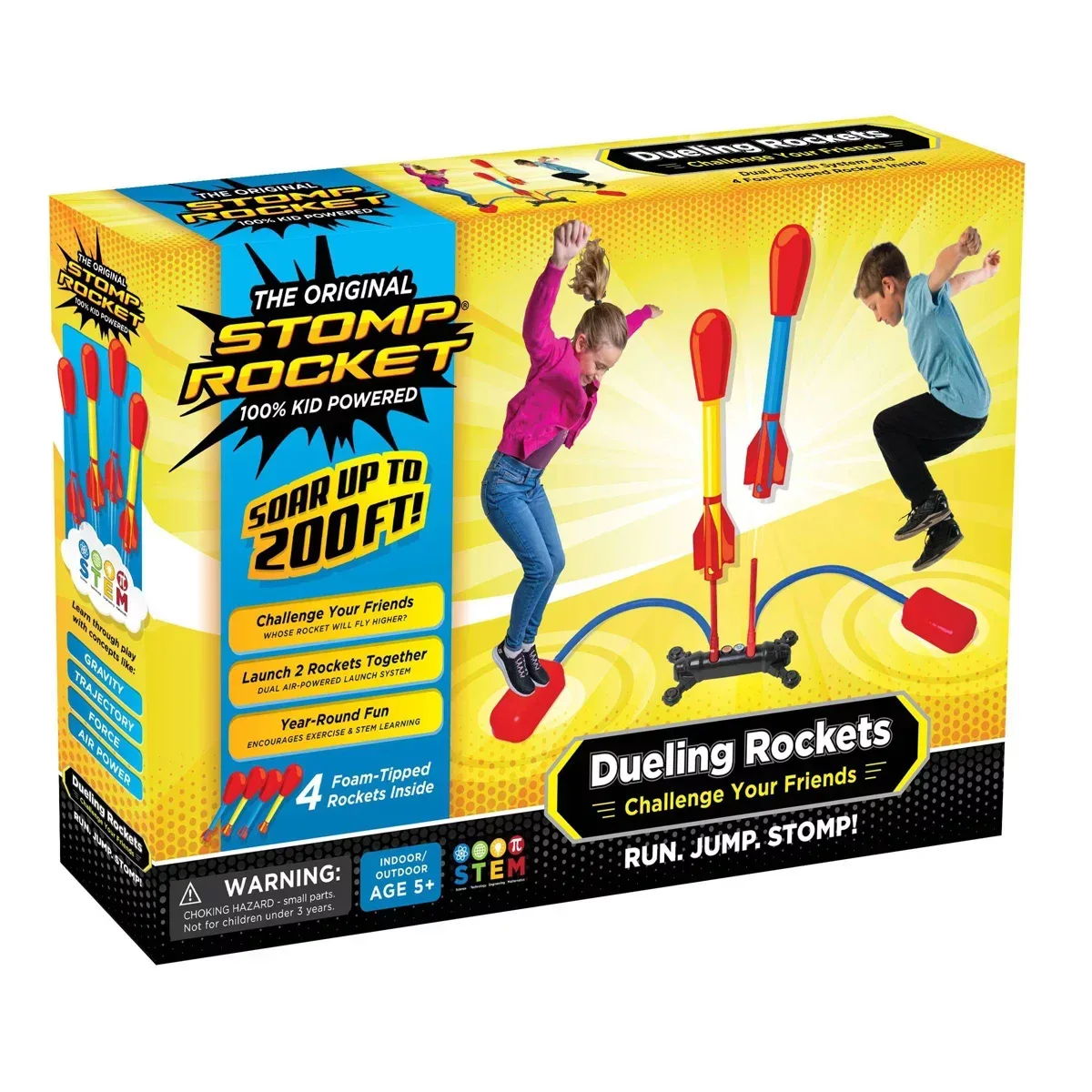
1. Stomp Rocket Trajectory Studies
With a Stomp Rocket, measure distance traveled at different launch angles (30°, 45°, 60°, 90°). 45° typically goes farthest. Demonstrates: projectile motion.
2. Bike-Wheel Speed Measurement
Mark a stretch of driveway; have child bike it. Time with stopwatch. Calculate miles per hour. Repeat at different effort levels. Demonstrates: velocity measurement.
3. Shadow Tracking
Place a stick in the yard. Mark shadow tip every 30 min throughout a sunny day. The marks trace a curve as Earth rotates. Demonstrates: Earth’s rotation.
4. Paper Airplane Wind Test
Make 3 identical airplanes. Launch them in different wind conditions (calm morning, breezy afternoon). Record distance. Demonstrates: air currents affect flight.
5. Rock-Drop Physics
Drop different-weight rocks from same height. They hit ground simultaneously (Galileo’s famous observation). Demonstrates: gravitational acceleration is constant.
6. Water Balloon Momentum
Toss water balloons at targets from different distances. Track which distances produce the most reliable hits. Demonstrates: projectile motion applied to aiming.
Biology (5 activities)
7. Bird Feeder Species Count
Set up a bird feeder. Count species visiting over a week. Record which food types (seeds vs suet vs nectar) attract which birds. Demonstrates: niche specialization.
8. Ant Highway Mapping
Find an ant trail. Map it with chalk. Place obstacles; observe how ants route around. Demonstrates: collective behavior / optimization.
9. Leaf-Vein Rubbing Classification
Place leaves under paper; rub with crayon to reveal vein patterns. Sort leaves by vein type (parallel vs netted). Demonstrates: monocot vs dicot classification.
10. Flower Pollinator Observation
Sit near a flower for 10 minutes. Count pollinators (bees, butterflies, flies). Demonstrates: pollination ecology.
11. Bean-Seed Germination
Plant bean seeds in different conditions (wet towel vs dry, light vs dark). Observe over 7 days. Demonstrates: germination requirements.
Earth Science (3 activities)
12. Rain Gauge
Clear container in yard; measure rainfall after storms. Chart over weeks. Demonstrates: measurement + local climate observation.
13. Soil Layer Investigation
Dig a 12-inch hole (with supervision). Observe and draw the layers: topsoil, subsoil, parent material. Demonstrates: soil stratification.
14. Puddle Evaporation
Measure a puddle after rain; re-measure every 2 hours. Track evaporation rate. Demonstrates: water cycle in real time.
Astronomy (2 activities)
15. Moon Phase Journal
Draw the moon each night for 28 days. Pattern emerges. Demonstrates: lunar cycle. Pairs with our Perseid Meteor Shower family guide for a fuller astronomy curriculum.
16. Perseid Meteor Shower Watch
August 12–13, 2026. Outdoor meteor-watching. Real astronomy. Full context in our Perseids guide.
Chemistry (2 activities)
17. Homemade Sundial
Position a stick in the ground. Mark where its shadow falls at each hour. After a day, you have a working sundial. Demonstrates: ancient astronomy through observation.
18. Solar Oven (DIY)
Pizza box + aluminum foil + plastic wrap = solar oven. Melt s’mores or warm food. Demonstrates: solar thermal energy. See our standalone solar oven guide for detailed construction.
Equipment Worth Having
- Magnifying glass ($8) — extends every biology activity
- Notebook + pencils ($10) — essential for recording observations
- Ruler or tape measure ($5) — physics activities benefit
- Stopwatch (smartphone works) — for timing
- Field guide (Peterson or Sibley, ~$20) — for species ID
- National Geographic Outdoor Explorer Set ($30) — bundled tools
Total: $35–$75 for a meaningful outdoor science kit. None required; all extend utility.
Safety Notes
- Sun protection: outdoor activities in summer need sunscreen and hat
- Tool safety: digging activities (#13) use a small shovel; adult supervises
- Bug awareness: ant activities (#8) — check for stinging ants before sitting nearby
- Weather-appropriate timing: don’t do rain-gauge activity during active lightning
When to Do This
Seasonal timing:
- Spring: planting (#11), flower observation (#10)
- Summer: bird feeding (#7), meteor watching (#16), stomp rocket (#1)
- Fall: leaf collection (#9), rain-gauge setup (#12)
- Winter: moon observation (#15), shadow tracking (#3, less sunlight)
The Bottom Line
Backyard science is the cheapest STEM a family can do, and often the best. 18 activities above cover every major science domain at preschool-through-elementary level. Start with 2–3 that match your kid’s current interests; add more as engagement grows.
Activities tested across spring/summer 2025 with children ages 4–10.